How To Do Pull Ups For Beginners
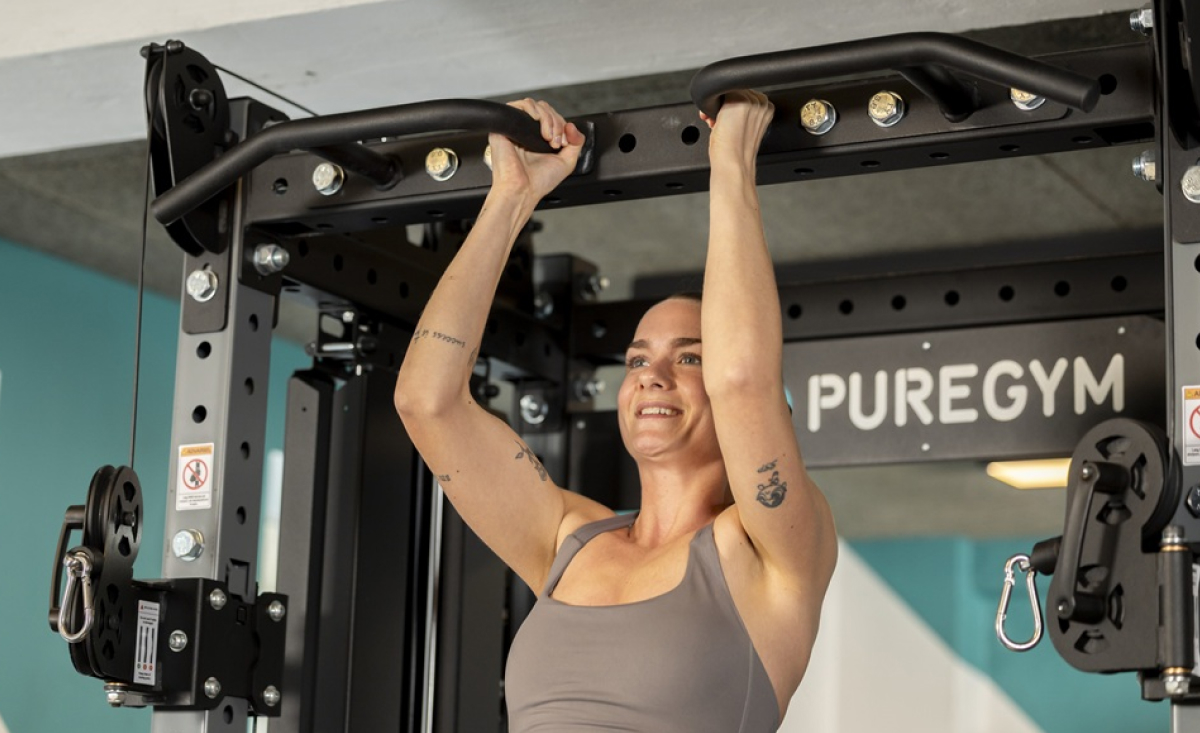
The pullup is one of the most advanced bodyweight exercises out there. It demands serious back and bicep strength, plus a solid core. You’ll recruit multiple muscle groups, including the latissimus dorsi, trapezius, rhomboids, biceps, deltoids, and core muscles to do this exercise.
Mastering the pullup is a true test of strength. Benefits include increased pulling power, muscle growth, better posture, and improved stability. Getting your first pullup takes time and dedication, but if you’re committed to nailing this movement, you’re in the right place. This beginner’s guide breaks down exactly how to work toward your first pullup.
While there are several grip variations for pullups and chinups, this guide focuses on the widegrip pullup. It’s arguably the most challenging variation, and once you can do this one, the others typically come much easier.
How Long Does It Take to Achieve Your First PullUp?
There’s no exact timeline for achieving your first pullup. Several factors come into play—your body weight, core strength, and upperbody strength all influence how long it takes. If you’re heavier, it may take longer to pull your own body weight. And if you’re starting with low muscle mass, your first pullup won’t happen overnight.
As a general guideline, if you already strength train, you can expect to build enough strength for your first pullup in about 6–12 weeks. If you’re new to working out or lifting weights, it may take longer.
If you’re not seeing progress after 12 weeks, you may not be training hard enough. Make sure you gradually increase the weight in your upper-body workouts each week, aiming to finish your sets with around three reps left before failure to get the best strength results.
Is Achieving Your First PullUp Harder for Women?
Achieving your first pullup is tough for anyone. Even welltrained lifters will tell you that pullups are among the hardest exercises in the gym. The movement requires practice, consistency, and patience for both men and women.
Generally speaking, men tend to get their first pullup more easily than women due to higher testosterone levels, greater muscle mass, and a naturally higher capacity for building strength.
That said, this isn’t a hard rule. Plenty of women achieve their first pullup quickly, and plenty of men struggle with it. Individual strength, training habits, and consistency matter far more than gender.
How to Achieve Your First PullUp as a Beginner
If you can’t do a single pullup yet, it can be hard to know where to start. The best approach is to build strength in the muscles responsible for the movement—primarily your back and biceps. Strengthening these areas helps you develop the power needed to lift your own body weight.
Below are six exercises that will help you work toward your first pullup. You can add a few of these to your current workout routine or combine them into a beginner pullup program.
Lat Pulldowns
The lat pulldown machine closely mimics the pullup and targets many of the same muscle groups, including the latissimus dorsi, posterior deltoids, rhomboids, trapezius, and biceps. Instead of pulling your body up toward the bar like you would in a pullup, you sit down and pull the bar toward your upper body. This creates more stability, and makes the movement easier to control.
While the lat pulldown isn’t identical to a pullup, it strengthens the same muscles in a very similar movement pattern, making it an excellent progression exercise.
- Sit down and adjust the thigh pad so it fits snugly against your legs. This keeps you secure and prevents you from using momentum.
- Stand up to grab the bar with a pronated (overhand) grip just outside shoulder width.
- Sit back down with your feet planted and let your arms fully extend.
- Pull the bar toward your sternum, imagining your elbows moving toward your back pockets. Aim to bring the bar to just below your chin.
- Slowly return to the starting position with full control, allowing your arms to extend completely. Then repeat.
Pro tip: To make this exercise harder, slow down the eccentric (lowering) phase. After pulling the bar down, take a full three seconds to return to the top. This increases time under tension and challenges the muscles more effectively.
Assisted PullUps
The assisted pullup machine helps you practice the pullup movement by counterbalancing your body weight. The more weight you select, the more assistance you get—meaning the exercise becomes easier. You’ll kneel on the pad, which reduces core involvement, but it’s still a great way to build strength and learn the movement pattern.
For example, if you weigh 155 lbs and set the machine to 155 lbs, you’re essentially pulling no weight. If you set it to 75 lbs, you’re pulling the remaining 80 lbs of your body weight.
- Choose a weight that gives you enough assistance to complete your reps with good form.
- Grip the bar with a wide, pronated grip just outside shoulder width.
- Kneel on the pad so it lowers and your arms can fully extend.
- Pull yourself up toward the bar, driving your elbows down and back.
- Lift until your chin clears the bar.
- Lower yourself slowly back to the starting position. Repeat.
StraightArm Hangs
When learning pullups, many people focus only on the pulling motion and forget about grip strength and core stability. Straightarm hangs help build both, reducing swinging and improving control during pullups.
- Stand on a box or platform and grab the bar with a pronated grip just outside shoulder width.
- Hang with your arms fully extended.
- Engage your core by pulling your belly button toward your sternum and bringing your feet slightly in front of your body to create a hollow hold.
- Retract your shoulder blades slightly to stabilize your upper body.
- Hang for as long as possible, rest, and repeat.
Pro tip: If your legs swing, try crossing your ankles. Once you’ve mastered the hang, track your time each week and aim to beat your previous best.
SingleArm Dumbbell Rows
Although pullups involve a vertical pulling motion, it’s important to train horizontal pulling as well. This strengthens the entire back and helps prevent muscular imbalances.
Unilateral exercises like singlearm rows also help correct strength differences between sides. In bilateral movements, your stronger side can dominate, but unilateral work forces each side to pull its own weight. Start with your weaker side so both sides get equal work.
- Hold a dumbbell in your working hand.
- Place your opposite hand and knee on a bench, keeping your workingside foot firmly on the floor.
- Let your working arm extend fully while maintaining a neutral spine.
- Row the dumbbell toward your hip, guiding your elbow in a slight arc rather than straight up.
- Lower the weight slowly and with control.
- Switch sides after completing your reps.
Pro tip: If your torso starts swinging or you can’t maintain form, choose a lighter dumbbell. Proper control is key.
Eccentric PullUps (Negative PullUps)
Training the eccentric (lowering) phase of a pullup is a powerful way to build strength, especially if you can’t yet perform the full movement. Eccentric training exposes your muscles to loads they can’t yet lift concentrically (on the way up), helping you progress faster.
In a pullup, the eccentric phase is the controlled lowering from the top position back to a hang.
- Stand on a box so you can easily reach the bar.
- Grab the bar with a pronated grip just outside shoulder width.
- Start with your chin above the bar—jump slightly if needed.
- Once stable, lower yourself as slowly as possible by extending your arms.
- When your arms are fully extended, step back onto the box and repeat.
Alternating Dumbbell Bicep Curls
While your back does most of the work in a pullup, your biceps play an important supporting role. Strengthening them can make a noticeable difference in your pullup progress.
Alternating curls let you train each arm individually, helping address imbalances. Start with your weaker arm first.
- Hold a dumbbell in each hand with a supinated (underhand) grip.
- Let your arms hang at your sides.
- Curl one dumbbell toward your shoulder, keeping your elbow close to your body and squeezing your bicep at the top.
- Lower the weight with control.
- Repeat on the other side.
How Many Reps and Sets Should You Do to Get Your First PullUp?
There’s no single perfect rep or set scheme. The key is training close to failure so the last couple of reps feel challenging.
- Low reps (3–5): Best for strength
- Moderate reps (6–12): Best for muscle growth
- High reps (12+): Best for endurance
A mix of rep ranges works well, but since strength is the priority for pullups, focus on lower to moderate rep ranges (3–8).
General guidelines:
- Low reps: 4–5 sets
- Moderate reps: 3–4 sets
- High reps: 2–3 sets
If you train consistently, progressively increase your weights or reps, and stay patient, you’ll be well on your way to achieving your first pullup. It’s a tough movement that takes time, so don’t get discouraged. Track your progress to stay motivated.
If you want personalized guidance, a certified personal trainer can help you build a customized program and reach your goals faster.
Looking for a gym to get started with perfecting pull ups? Find the nearest PureGym to you!