Flexibility Exercises for Men: Workout Plan to Improve Mobility
Women Vs Men | Flexibility & Age | Benefits Of Flexibility Training | Practical Tips | Flexibility Exercises | Types Of Stretching | Flexibility Routine | Common Mistakes | FAQs
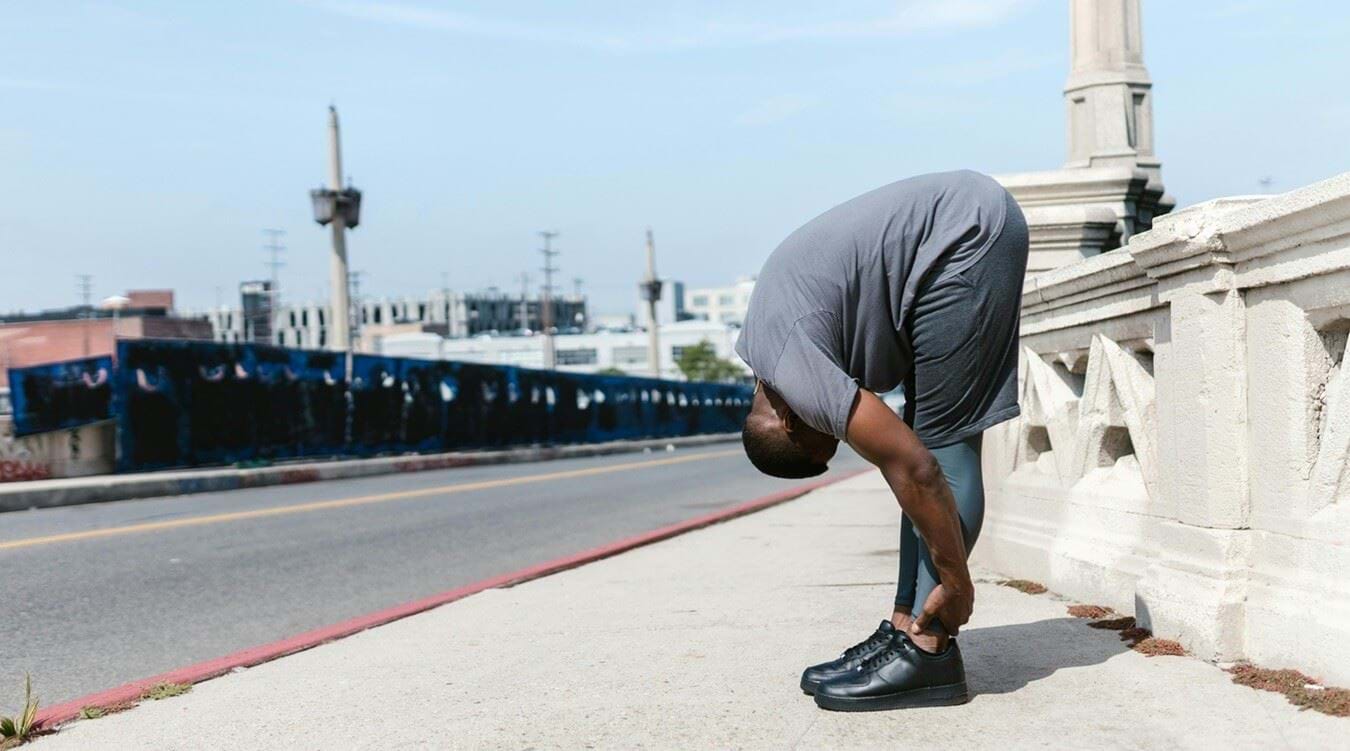
If you're a man who struggles to reach his toes or even sit on the floor with crossed legs, you're not alone. Poor flexibility in men is common, especially as they get older. But it doesn't have to be this way. Creating a good flexibility routine for men can help you to move with ease, reduce the risk of injury, and even improve your lifts in the gym.
Read on to learn why men are typically less flexible and find the best men's stretches for flexibility, as well as a free flexibility workout for men.
Quick summary
Men are often less flexible than women due to differences in hormones, connective tissue, bone structure, and lifestyle.
Flexibility tends to decline with age but this can be prevented and reversed by using your full range of motion and training for flexibility.
Benefits of stretching include reduced risk of injuries, less pain and stiffness, better posture, and increased performance.
Stretching little and often with a range of stretching will help to improve flexibility over time.
Use a mix of dynamic, passive, and active stretching to get best results.
Common mistakes include stretching with incorrect intensity, not being consistent, and not stretching long enough.
Are women more flexible than men?
Flexibility is influenced by several factors, including bone length, joint structure, and lifestyle. Gender also plays a part, with studies showing women are more flexible than men on average. But why are men less flexible than women?
There are a few physiological and environmental reasons that causes differences in flexibility in men vs women:
Hormones
Men have higher levels of testosterone and lower levels of oestrogen than women. Testosterone can negatively impact flexibility as it increases muscle mass and density, which requires more force to stretch. Oestrogen, on the other hand, promotes flexibility; it promotes the production of collagen and elastin which keep tissues elastic. Differences in the levels of these hormones are one of the reasons why men are less flexible than women.
Connective tissue
Connective tissue supports, connects, and binds tissues and organs in the body, including muscle and joints. The structure of connective tissue differs between men and women; the tissue is dense and firmer in men, and softer and more elastic in women. This difference is one of the reasons women are more prone to cellulite, but it can impact flexibility too.
Bone structure
Gender differences in bone structure are another reason why women are more flexible. Men tend to have thicker, stronger bones which require more force to stretch, while women tend to have wider pelvis' which plays a role in hip flexibility.
Training
Although there are physiological differences in men and women, lifestyle and training plays a part in flexibility differences. Men are more likely to train for muscular hypertrophy, which can lead to shorter, stiff muscles when done without stretching, while women are more likely to engage in activities like yoga, Pilates and dance which involve stretching and lengthening the muscles.
While men tend to be less flexible than women, this isn't always the case; some men are extremely flexible, and some women are extremely stiff. Regardless of gender, anyone can improve their flexibility by adding in mobility and stretching exercises.
Does flexibility decline with age?
There are plenty of anecdotes about getting stiff as you age, and multiple studies have found that flexibility does decline with age in both men and women, with significant reductions each decade from the age of 55.
However, loss of flexibility is minimised in those who are physically active, and training flexibility has shown to have positive effects on range of motion in older adults. This suggests that it is an increasingly sedentary lifestyle that is the cause of declining flexibility levels, rather than age itself.
Using your full range of motion is the easiest way to prevent declining flexibility levels as you get older. If you are already experiencing a loss of flexibility, doing dedicated flexibility training can help to reverse any losses and improve your flexibility.
Benefits of flexibility training for men
Flexibility training is often overlooked in favour of more intense workouts, but training for flexibility can improve the quality of your life. Benefits of flexibility and mobility work include:
Reduced risk of injuries.
Weak, tight muscles are more prone to injuries, and the less flexibility you have, the more likely you are to pull something while performing normal movements. Stretching helps your muscles to lengthen and become less rigid, so they can achieve different positions without injury.
Reduced pain and stiffness.
Regular flexibility training can reduce pain and stiffness associated with tight, tense muscles and muscular imbalances. Stretching has been shown to reduce passive muscle tension, with studies finding stretching to be as effective as strength training in treating chronic pain.
High quality movement.
Improving your flexibility increases your range of motion, making it easier to bend down, reach up, and every movement in between.
Enhanced performance.
Improving your flexibility allows you to use more muscle fibres in a greater range of movement, meaning more strength and power and overall better physical performance.
Better posture.
Weak and imbalanced muscles can pull our bodies into unfavourable positions, leading to poor posture. Flexibility training allows your muscles to lengthen and reach correct alignment, meaning better posture and less strain on the body.
Improved circulation.
Stretching promotes blood flow to the muscles by widening the surrounding blood vessels, reducing compression on the muscles, and stimulating the nervous system to increase blood flow.
Promotes relaxation.
Learning how to relax the muscles is a key part of flexibility training. Regularly training the body to relax can reduce tension and promote mental relaxation too.
How to increase flexibility for men: practical tips
Consistency is key
Adding as little as 5-10 minutes of stretching daily, or 20 minutes 2-3 times a week, will have better results than doing long flexibility sessions a few times a month. Aim to stretch each muscle group at least twice a week to see long term improvement.
Incorporate flexibility into your existing workouts
Although you can create dedicated men's flexibility workout, you don't have to do so in order to improve your flexibility. Simple ways to introduce flexibility training into your current workout routine include:
Adding dynamic stretches into your warmup
Stretching in between sets
Dropping the weight and increasing ROM for a set (e.g. aiming for a deep squat rather than thighs parallel with the floor)
Finishing your workout with 5-10 minutes of stretching
Use active and passive stretching
Include both passive stretching (using an external force to create a stretch and holding it for a period) and active stretching (using the opposing muscles to create a stretch) in your training.
Passive stretching helps to relax and lengthen the muscles, relieve tension, and increase blood flow, while active stretching helps to build strength alongside flexibility. Utilising both stretching methods improves range of motion efficiently while building strong, resilient muscles.
Move more
One of the simplest ways to help your flexibility is to get up and move about. If you spend a lot of the day seated, get up at least once an hour and go for a short walk or do some stretches to engage and relieve your muscles.
Relax
Improving your flexibility isn’t something that can be forced. Your central nervous system is responsible for how much give your muscles have, which means you get more results from consistent and relaxed stretching than trying to force change. Avoid extreme stretching that feels unsafe and focus on slow and controlled movements while doing deep, slow breaths to help the body relax.
Flexibility exercises for men
Cat cow
Cat cow is a gentle stretch that improves spinal flexibility and ease tension. Try doing a few rounds when you wake up, before bed, or as part of your warmup.
Puppy pose
Puppy pose stretch opens up the shoulders, chest, and upper back, areas that are often stiff and tight. Try holding for 30 seconds at the end of a work out or to ease tension during the day.
Cobra pose
The cobra pose stretches the chest, shoulders, hip flexors, and abdomen, and strengthens the spine, helping to alleviate back pain and improve posture. Try some gentle cobras at the end of the day or as part of a cooldown.
Lying chest stretch
Stretching the chest can help to combat poor posture caused from hunching and alleviate tension from stiff muscles. Add this stretch to your upper body workouts or after long periods of slouching.
Shoulder dislocates
While the name sounds ominous, shoulder dislocates improve range of motion in the chest and shoulders, improves shoulder joint health, and loosens the rotator cuffs. Use as part of a warm up, first thing in the morning, or before bed.
90 90 hip rotations
This dynamic stretch incorporates internal and external hip rotation, improving both flexibility and stability in the hips. Hip rotations can help with lower back, knee, and hip pain and poor posture. Use in your warm ups or during the day.
Pigeon pose
Pigeon pose releases tension and improves flexibility in the hips and glutes and can help with posture and lower back pain. Do a few rounds of 30 seconds as part of your cooldown.
Kneeling lunge stretch
The kneeling lunge stretch lengthens the hip flexors, muscles which are typically tight from periods of sitting, and engages the glutes, which are often weak from sitting. This stretch can help with back pain and posture and improve hip mobility.
Elephant walks
Lying hamstring stretch
This passive stretch relieves tension and improves flexibility in the hamstrings and can help with back and knee pain. Include as part of your lower body cooldown or after a walk.
Standing quad stretch
The standing quad stretch improves flexibility and relieves tension in knees, hips, and lower back. It can also help with stability and balance.
Frog splits
Frog splits stretch the adductors and groin, improves hip mobility, and can help to relieve tension in the back. Add to your cooldowns or after long periods of sitting.
When and how to stretch
We touched on active and passive stretches briefly above, and these are just some of the types of stretching you can do. Different types of stretching work best and are safest in different situations. Here’s when, and how, to use them.
Dynamic stretching
Dynamic stretching involves moving through a full range of motion with control, rather than holding a stretch for a period of time. An example of this would be rocking forwards and back in a frog split or kneeling lunge. This type of stretching works great as part of a warmup and helps to build control and use of flexibility.
Passive stretching
Passive stretches use external force, such as gravity, your hands, or a partner, to create a stretch which is held for 20 or more seconds. Passive stretching is a great tool for increasing flexibility as it can create a deep stretch while allowing the muscles to relax. It should only be done on warm muscles, either at the end of a workout or after doing some dynamic and active stretches.
Active stretching
Active stretching involves using the opposing muscles to create a stretch, for example using the glutes to extend the hips and stretch the hip flexors. Active stretches build strength and control at end range and teaches the nervous system that you are safe, which helps to improve flexibility. It can be done before or after working out,
PNF stretching
PNF stretching combines passive and active stretching and is extremely effective in improving flexibility, with one study showing greater results for men than women. It usually involves three steps:
Passive stretch: hold a stretch for 10-15 seconds
Active stretch: contract either the muscle being stretched (pushing against the stretch) or the opposing muscle (pulling deeper into the stretch) for 10-15 seconds
Passive stretch: relax deeper into the stretch and hold
Repeat: repeat up to three times
PNF stretching is best done on warm muscles, either after a workout or after a short warmup.
Full body flexibility routine for men
Here’s a 15 minute stretching routine for flexibility for men that can be done daily or a few times a week. It includes dynamic, active, and passive stretching, and can be completed after working out or by itself.
Warm up (3 minutes)
Cat cow – 30 seconds
Begin on hands and knees, wrists under shoulders and knees under hips. Inhale while dropping your belly and lifting your chest up. Exhale as you round your spine, tuck your chin, and draw your belly button in.
Superman lifts – 30 seconds
Lie face down with arms extended overhead. Inhale as you lift your arms, chest, and legs off the floor, keeping your neck neutral. Hold briefly, engaging your glutes and back. Exhale as you lower with control.
Side lying thoracic rotations – 30 seconds each side
Lie on one side with your thighs at a 90 degree angle to your torso and knees bent at 90 degrees, with both arms straight in front of you. Exhale and open your top arm in an arc behind you while rotating your chest towards the ceiling, following your hand with your gaze. Inhale as you return.
Kneeling lunge to half split – 30 seconds each side
From kneeling, step one foot in front so your knee is at a 90 degree angle in line with the ankle. Keep your torso upright and tuck your pelvis under while pushing the hips forward to stretch the hip flexor. Shift your hips back and straighten the front leg, pointing the toes to the ceiling. Keep a flat back while folding over the front leg, placing hands on either side of the foot. Hold the stretch before moving back to a lunge.
90 90 hip rotations – 30 seconds
Sit on the floor with one leg in front of you and one leg behind you, both knees bent at 90 degrees. Keep your torso tall and place your hands behind your hips. Rotate your torso and knees towards the back so that you are in a 90 90 position on the opposite side. Move through both sides.
Elephant walks – 30 seconds
Stand with feet hip width apart and fold forward at the hips, placing your hands on the floor or on blocks. Your head and neck should be relaxed. Bend one knee while straightening the other leg, alternating between both sides slowly.
Part 2 – PNF stretching (7 minutes)
For each exercise, do:
- 10 seconds passive hold
- 10 seconds contracting (pushing) the muscle being stretched against the stretch
- 10 seconds passive hold
- 10 seconds contracting (pushing) the opposite muscle into the stretch
- 20 seconds passive hold
Puppy pose
Lying chest stretch
Cobra
Kneeling lunge
Pigeon pose
Lying hamstring stretch
Frog split
Common mistakes in flexibility training
Stretching seems simple enough, but it's important to do it correctly to get results and reduce the risk of injury. Here are some common mistakes made men make when trying to increase flexibility.
Stretching too intensely. People often think the harder they stretch, the quicker they'll get results, and will push too hard. Stretching should never be painful -- not only does this risk pulling a muscle, but it signals to the body that it is in danger which triggers the muscles to contract rather than lengthen.
Not stretching intensely enough. While it's important to avoid overstretching, stretching needs to be intense enough to trigger change. Aim for a stretch that causes mild tension or discomfort, but at a level that you can hold while breathing normally.
Not holding stretches long enough. You need to hold a stretch for at least 20 seconds for your muscles to begin to relax; a five second stretch after a workout won't do it! Aim to hold each stretch for 30-60 seconds.
Not warming up. Warming up before stretching is essential as it increases how pliable the muscles are, making them more capable of stretching with a lower risk of injury.
Ignoring breath work. Deep, controlled breathing signals to the body that you are safe, which allows you to stretch more deeply.
Not stretching consistently. Stretching needs to be done consistently to get results. Aim to stretch each muscle group twice a week as a minimum.
FAQs
Yes - studies have found that low levels of testosterone are linked to poor mobility in older men. This may be due to weakened muscle and connective tissue from low testosterone. However, regular strength training and flexibility training can help to combat declining strength and flexibility levels and may positively impact testosterone.
There is no need to adjust flexibility training based on your age. Including active, dynamic, and passive stretches into your training twice a week consistently will see results for everyone.
Weightlifting doesn’t automatically reduce flexibility, but training using only a small range of motion or focusing only on certain muscle groups can cause stiffness and tightness. Lifting through a full range of motion, strengthening all muscle groups, and stretching regularly will improve flexibility and strength.
Aim to include dynamic stretches as part of a warm up, and static stretches after your workout to cooldown.
Excess body fat can obstruct some stretches by physically getting in the way of movement, while significant muscle mass can make stretching more challenging as it creates more resistance to stretch. Maintaining a healthy body composition and stretching consistently will help to improve flexibility.
Improving your flexibility can help with back pain and poor posture when caused by muscular imbalances from weak, tight muscles. Stretching the chest, shoulders and hip flexors while strengthening the back and glutes can often help both these issues.
No – although men are typically less flexible than women, stretching improves flexibility in both sexes. Focus on including a range of stretching techniques into your training and keeping consistent with this over time.
Both dynamic and static stretching are useful tools for men to improve their flexibility. Passive stretching has more potential to improve flexibility, but we recommend including both in your routine.
Flexibility progress is not linear, and your range of motion will differ day to day. Signs that you are making progress in your flexibility include:
Deeper range when stretching
Being able to hold stretches for longer
Stretches feeling more comfortable
Better range of motion when weightlifting
Reduced pain and stiffness in day to day
Yoga, Pilates, Thai Chi, martial arts, gymnastics, and calisthenics are all sports that can help to improve your flexibility.
Flexibility is the ability of the soft tissues to passively stretch, while mobility is the ability to actively move joints through a range of motion. Both are important to have a strong, safe range of movement. Learn more about the difference between mobility and flexibility here.
Learn more about the difference between mobility and flexibility here.
Related Articles