Ultimate Calisthenics Home Workout Guide For All Levels
What Is Calisthenics | Benefits | Beginner Exercises | How To Start | Full Body Routine | Weekly Plan | Progressions | Tips | Home Setup | FAQs
Calisthenics is one of the oldest forms of exercise, but it's exploded in popularity recently — especially for home workouts. A calisthenics home workout can be simple and effective whether you're new to fitness or experienced. Using your own bodyweight, you can build strength, improve mobility, and even boost cardio, without needing a gym.
With a background in aerial arts and pole, PureGym Newport Wales PT Haris Hussnain regularly trains calisthenics and believes it can provide a good balance to weight training. In this guide, Haris covers everything you need to know about calisthenics training at home, including exercises, a sample routine, and a realistic weekly structure to help you get results.
Quick summary
Calisthenics focuses on bodyweight exercises rather than using weights
Foundational calisthenics exercises include push ups, pull ups, and squat variations
Calisthenics can be done without any equipment, making it ideal for home workouts
Calisthenics exercises work the full body, especially the upper body and core
Calisthenics can be progressed by choosing more challenging versions of an exercise or adding load
What is calisthenics?
Calisthenics is a type of strength training that uses your bodyweight and gravity to provide resistance. It can be traced back to ancient cultures including Greece, China, and India where calisthenics exercises were used to train military as well as athletes. Today, calisthenics is sometimes known as street workouts because they are often practiced outside in the city rather than in a traditional gym.
Advanced calisthenics exercises, like the human flag and planche, look super impressive, but the foundations of calisthenics are solid, basic movements like push-ups, pull-ups, planks, lunges, and bodyweight squats.
The benefits of training calisthenics
There are many benefits to training calisthenics:
Strengthens the ligaments, tendons, muscles, and bones. As a form of resistance training, calisthenics loads the ligaments, tendons, muscles, and bones, making them stronger and more resilient over time.
Increases mobility and movement quality. Calisthenics prioritises functional exercises that use your full range of motion, improving mobility and flexibility.
Improves posture. Building strength and flexibility can improve posture by addressing muscular imbalances. Many calisthenics exercises, like deadhangs, train the scapular and rotator muscles which improves posture.
Can train anywhere. Because calisthenics can be done without equipment, workouts are accessible whether you're at home, on holiday, or in a park.
Beginner friendly calisthenics exercises to build a strong foundation
Many people start calisthenics because they want to master advanced calisthenics exercises that have become popular online, from handstands and pistol squats to muscle ups and front levers.
However, these impressive exercises require a huge amount of strength, stability, and mobility to achieve and its unlikely most beginners in calisthenics will be able to do them. Even if you are a regular gym goer, these exercises are often out of reach!
If you want to start calisthenics at home, focus on mastering the foundational movements first. These exercises form the base of a strong beginner calisthenics home workout and help you learn proper movement patterns before moving on to more advanced calisthenics movements if you want to.
Modified push ups
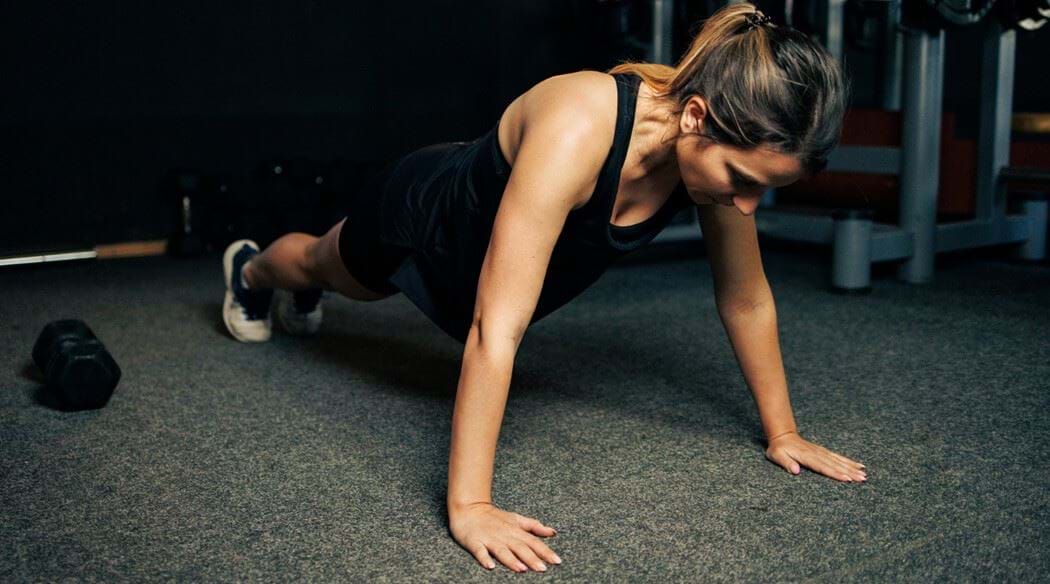
Push ups strengthen the chest, shoulders, triceps, and core, and mastering the push up is key for getting many advanced calisthenics exercises. There are plenty of push up variations to choose from depending on your fitness level: knee or incline push ups are great for beginners working their way up to a full push up.
Hollow body holds
The hollow body hold is a challenging but effective core exercise that trains core strength and stability. Adding the hollow hold into your training can also help with learning the engagement you need for many calisthenics exercises.
Bodyweight squats
The bodyweight squat is simple but effective when done correctly, engaging the glutes, quads, hamstrings, and calves. It can be made more challenging by slowing down the tempo, adding in a pause or pulses, or doing single leg variations like split squats or pistol squats.
Deadhangs
Pull ups are a popular goal that require a good level of back strength, and it can take months to fully master this exercise. Mastering deadhangs is the first step to get your first pull up, and a great way for beginners to get familiar with a pull up bar. The deadhang involves hanging from the bar by both hands, building grip, arm, and back strength. While this is something we easily do as children, we often lose this ability as we age and stop practicing.
Once you're able to hang for 30 seconds, you can try adding scapular pull ups by shrugging your shoulders down in a deadhang to bring your body higher. From there, you can use a resistance band to work on band assisted pull ups. The resistance band absorbs your weight, so you have less to pull. You can find more tips on how to get your first pull up here.
Other exercises that are good for beginners to include are:
- Pike push ups: this push up places more emphasis on the shoulders and hamstring mobility. If a pike push up is too hard, dolphin push ups are a great alternative.
- Glute bridges: use tempo or a single leg variation to make these more challenging.
- Planks and side planks: planks strengthen the core and shoulders.
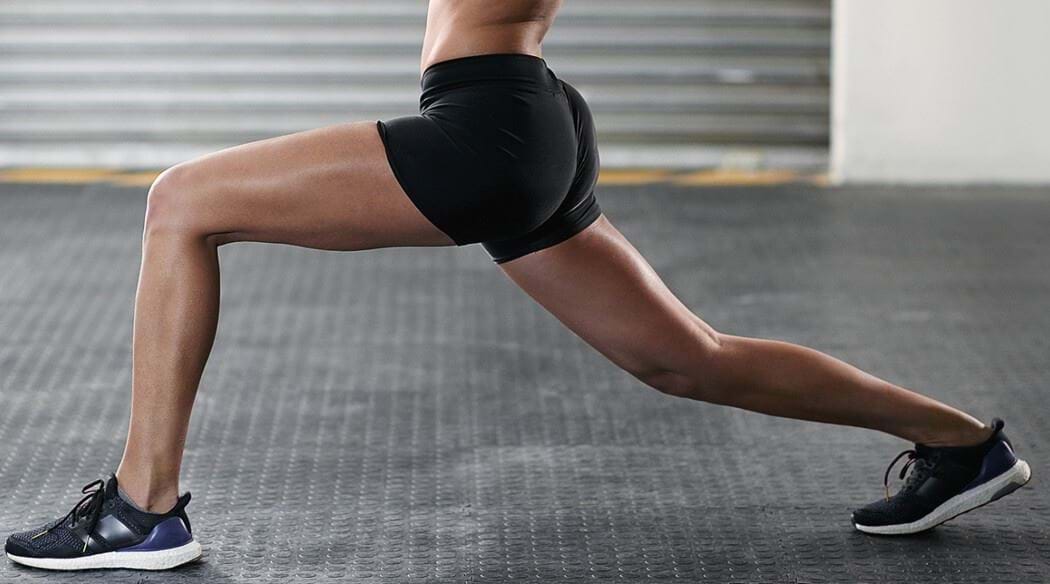
- Step-backs or reverse lunges: work the glutes, core, and single leg strength.
- Inverted rows: use a sturdy table or frame to row yourself up from.
How to start calisthenics at home without equipment
A big reason people choose calisthenics at home for beginners is that it's so versatile. All you need is enough floor space and you can start with a calisthenics no equipment workout right away.
Here are some tips that will help you when starting calisthenics at home without equipment:
Master the foundations first. Spend a few weeks building a solid level of strength and mastering the basic exercises above before you start playing with calisthenics exercises like L sits or headstands.
Train multiple muscle groups in one workout. Although you can split muscle groups up, training movements that work multiple muscle groups helps to build coordination, stability and full body strength while avoiding muscle imbalances.
Include mobility work. Many advanced calisthenics exercises require a lot of flexibility and mobility. Training these areas early on will help you progress faster and improve your movement quality. Check out our mobility hub here for ideas.
Prioritise rest and recovery. Calisthenics is taxing on the body, especially as you get more advanced. Make sure you are getting plenty of sleep and quality nutrition to support your recovery from workouts.
Include weight training. Calisthenics is a great way to train but it has limitations, and it can be harder to progressive overload with calisthenics alone. Combining calisthenics with weight training, either at home or in the gym, gives you the best of both worlds, as building strength with weights makes it easier to progress in calisthenics.
Full body beginner calisthenics home workout
Ready to dip your toe into the world of calisthenics? Try this simple calisthenics workout routine at home instead of one of your usual gym workouts. It works all the major muscle groups and brings in a little cardio.
Warm up
Cat/cow stretch — 30 seconds
Arm circles — 20 seconds each direction
Cossack squats — 8 each side
Workout
Complete 3 rounds with 60 seconds rest between rounds.
Pause squats — 12-15 reps
Knee push ups — 8-10 reps
Reverse lunges — 10 reps each side
Tricep dips — 8-12 reps
Superman's — 10-12 reps
Planks — 30 seconds
Weekly at home calisthenics workout plan
This is how an at home calisthenics routine could look like over a full week:
Day 1 – upper body
Knee push ups – 3 x 6-10 reps
Decline push ups – 3 x 5-8 reps
Hollow body hold – 3 x 20-30 seconds
Plank shoulder taps – 2 x 15 reps each side
Day 2 – lower body
Bodyweight squats – 3 x 10 reps
Split squats – 3 x 8-10 reps each side
Glute bridges – 3 x 12 reps
Standing calf raises – 3 x 12 reps
Day 3 – core and mobility
Hollow body hold – 3 x 30 seconds
Hollow tuck hold – 3 x 20 seconds
Plank – 3 x 30 seconds
Stretching – 5-10 minutes
Day 4 – active recovery
Light walk followed by 20-30 minutes of light stretching or yoga
Day 5 – full body strength
Push up superset (knee push ups and decline push ups) – 3 x 6-10 reps each
Bodyweight squat to split squat – 3 x 8-10 reps each side
Hollow body to hollow tuck – 3 x 30 seconds
Day 6 – cardio conditioning
Moderate cardio (e.g. jogging, cycling) – 15-20 minutes
Day 7 – rest and recovery
Rest or gentle stretching and foam rolling
Hybrid calisthenics and weights training plan
If you have access to a gym or some weights at home, combining your calisthenics at home plan with some weightlifting sessions is a great way to build serious strength. Here's how your training could look if you combined these two strength styles:
Monday: full body calisthenics workout at home
Tuesday: cardio
Wednesday: full body weights workout
Thursday: core and mobility
Friday: alternating lower/ upper body workout (weights and calisthenics)
Saturday: core and cardio
Sunday: rest
Calisthenics exercise progressions as you get stronger
Many people believe that you can't keep building strength and muscle with bodyweight exercises alone. While lifting weights is a simple and easy way to progress exercises, calisthenics exercises can also be progressed by choosing harder variations of the exercise, for example:
Bodyweight squats > split squats > pistol squats
Push ups > diamond push ups > single arm push ups
Pull ups > eccentric pull ups > weighted pull ups
Tricep dips > chest dips > weighted dips
Pike push ups > handstand push ups
Tips for staying consistent with home calisthenics training
Like all workout programmes, the best results come from staying consistent with a structured home calisthenics workout plan over time. Here are some things you can do if you’re new to training at home and need some help staying consistent.
Set up a dedicated space
Working out at home has a lot of benefits, but it can come with lots of distractions. Set up a dedicated space for your workouts, away from anything that might distract you, ahead of time. If possible, put your phone away or into airplane mode during your workout.
Schedule your sessions
When you’re training at home it can be easy to put off your workouts for later, which can turn into never. Schedule them into your day like you would any appointment and treat them like non negotiables.
Track your progress
Tracking your progress helps with consistency, motivation, and progression, as well as identifying when you might need to adjust your programme or even take an extra break. Seeing how far you’ve come and celebrating is a great way to stay on track.
How to set up a calisthenics space at home
You don't need an impressive home gym, lots of kit, or even a lot of space for calisthenics you can do at home - just some space to work out.
You can do calisthenics with no equipment at all, but if you are able to, buying some equipment gives you access to more exercises.
Here are some classic calisthenics items to consider investing in:
Exercise mat: provides cushioning for floor based exercises.
Pull up bar: great for pull ups, deadhangs, and hanging exercises like tucks. You can bars which fit over your door frame, or a pull up bar and dip station
Gymnastic rings: these work with a pull up bar, giving you the ability to do inverted rows, ring dips, ring push ups, assisted pistol squats, and more.
Parallettes: paralette bars are great for exercises like push ups, L sits, and chest dips.
Resistance bands: resistance bands can be used to make exercises more accessible or more challenging.
FAQs about calisthenics home workouts
If calisthenics is your sole form of training, aim to do 3-5 sessions per week. If you are also training with weights, aim for a total of 4-5 workouts each week split across calisthenics and weights.
A beginner calisthenics workout with a warm up and cool down should last around 30-45 minutes. For more advanced workouts where you are working on a specific skills, between 20-60 minutes is ideal depending on the intensity.
Yes. Calisthenics exercises like squats, lunges, and mountain climbers work well in circuit or HIIT style workouts that raise your heart rate and challenge the cardiovascular system.
Calisthenics are suitable for all levels including complete beginners as long as you warm up, use proper technique, and choose exercises suited to your fitness level.
An area the size of a yoga mat is enough for most calisthenics you can do at home.
Looking for more calisthenics workouts? Check out our favourite lower body bodyweight workouts here. If you want to build your own calisthenics workout routine for home, talk to one of our expert PureGym Personal Trainers for ideas and support. Find your nearest PureGym to get started.
Related Articles