Chair Yoga Exercises For Beginners And Seniors
What Is Chair Yoga? | Benefits Of Chair Yoga | Chair Yoga For Seniors | Chair Yoga For Beginners | Free Chair Yoga Plan | Chair Yoga Exercises | FAQs
Page Last Updated: 26th January 2026
Like the idea of yoga, but are worried that inexperience, balance, or mobility issues mean it's not for you? Here, PureGym Paisley based PT and Yoga Instructor Steph Green explains why chair yoga is a great way to get the benefits of yoga, particularly for seniors and beginners.
What Is Chair Yoga?
Chair yoga is a modified form of yoga that involves practicing asanas (poses) and pranayama (breathing exercises) while seated on a chair, or using the chair for support. It is designed to make yoga accessible to individuals with limited mobility or those who have difficulty standing for extended periods.
What Are The Benefits? Is Chair Yoga Effective?
Chair yoga has the same physical and mental benefits as yoga, with the added advantage of being accessible for anyone who is unable to stand for long periods of time. It is a gentle practice that is suitable for beginners, seniors, and those with disabilities or limited mobility.
Research supports these benefits, with studies showing chair yoga can improve mobility, functional fitness and overall quality of life in older adults and those with limited mobility.
Some of the benefits of practising chair yoga poses include:
- Improved flexibility and reduced stiffness. Chair yoga helps to stretch the muscles and increase flexibility, reduce stiffness in the joints, and improve overall mobility. Studies involving older adults have found that regular chair yoga practice can help improve joint mobility and ease stiffness, supporting everyday movement.
- Enhanced strength and stability. While yoga is often thought to just stretch the muscles, a lot of poses help to build strength and stability by maintaining alignment against the resistance of gravity and bodyweight.
- Better posture and alignment. Chair yoga helps to improve core strength and stretch the posterior chain, including the muscles in the back and shoulders. It also helps to raise awareness of alignment. Over time, this can help to improve posture and reduce strain on the spine and hips.
- Reduced stress and anxiety. Yoga practice involves breathwork and meditation, which can positively benefit stress and anxiety levels. Bringing these elements into your everyday life can also help to reduce your response to everyday stress and build your mental resilience.
- Enhanced circulation. While chair yoga is unlikely to count as high intensity cardio, the different poses can help to increase circulation, which is good for cardio health.
Chair yoga can be a pathway into other types of yoga, but equally can be practiced as your sole form of yoga indefinitely.
Why Is Chair Yoga Beneficial For Seniors?
Chair yoga can be practised by anyone, but one of the reasons chair yoga for seniors is so beneficial is because it allows them to get the benefits of yoga in a safe way.
Chair yoga has also been studied specifically in older adults, with research like this from the Springer Nature Link health journal suggesting it's a safe and accessible way to stay active, even for those managing long-term health conditions.
As we get older, we are more likely to experience poor balance, limited mobility, and reduced strength. Diving headfirst into more intense styles of yoga without a good foundation of strength and balance can increase the risk of injury and falls.
Practising poses with the aid of a chair reduces this risk and makes yoga more accessible, allowing strength and stability to be built up. Some people may find they can switch to other types of yoga after practising senior chair yoga, while others may prefer to continue with chair yoga.
What is the Best Chair Yoga For Beginners?
All forms of yoga can be good for beginners, but some styles are more challenging than others. Chair yoga can be easily modified to suit all levels of experience, so can help beginners to build the strength, stability, and flexibility to practice standing poses with more ease.
Free Chair Yoga Plan
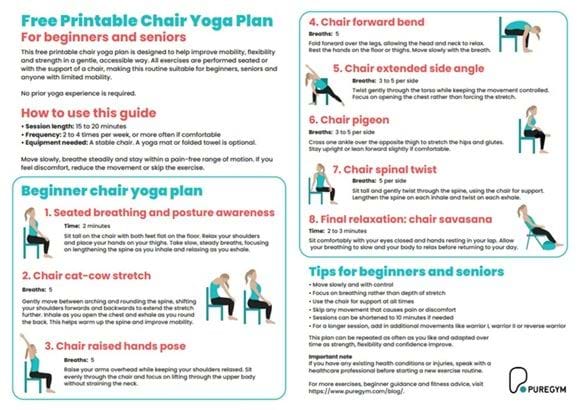
If you're looking for a free chair yoga plan, the exercises below can be used to create a simple, flexible routine that works well for beginners and seniors. Chair yoga does not need to follow a rigid structure to be effective. Instead, combining yoga poses in a thoughtful sequence allows you to tailor each session to your ability and available time.
Using the chair yoga exercises in this guide (we've explained these in more detail in the next section of this page), a short session can focus on gently warming up the body, improving mobility and finishing with relaxation.
Example beginner chair yoga plan (15 to 20 minutes):
- Seated breathing and posture awareness - 2 minutes
- Chair cat-cow stretch - 5 breaths
- Chair raised hands pose - 5 breaths
- Chair forward bend - 5 breaths
- Chair extended side angle - 3 to 5 breaths per side
- Chair pigeon - 3 to 5 breaths per side
- Chair spinal twist - 5 breaths per side
- Final relaxation in chair savasana - 2 to 3 minutes
This chair yoga plan can be practised 2 to 4 times per week, or more frequently if the movements feel comfortable. Sessions can be kept short, especially when starting out, and gradually lengthened as strength, flexibility and confidence improve.
For a longer session, you can add in the warrior I, warrior II and reverse warrior chair yoga poses detailed below.
For seniors or anyone with limited mobility, the focus should remain on slow, controlled movements, steady breathing and staying within a pain-free range of motion rather than trying to increase intensity.
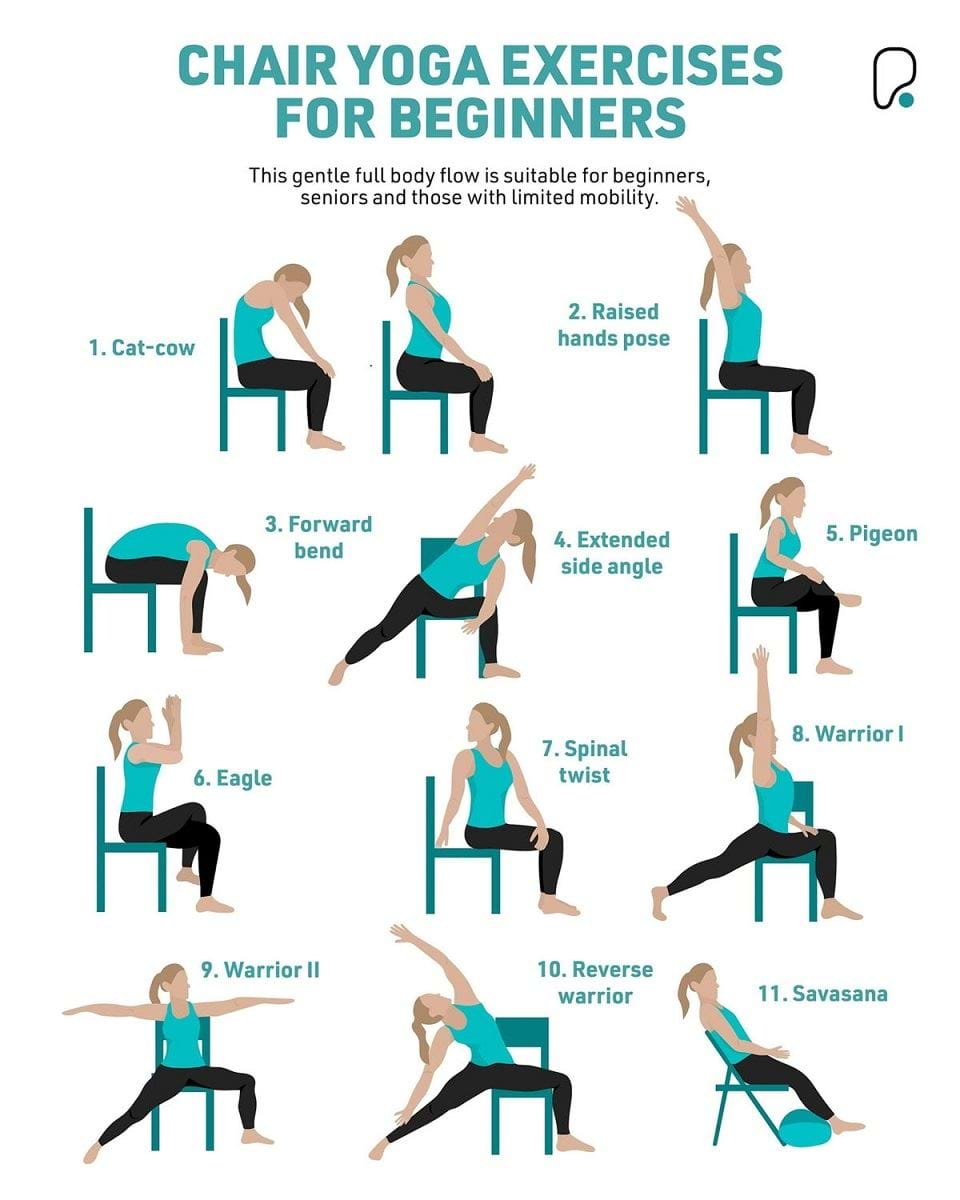
11 Chair Yoga Exercises for Seniors and Beginners To Try
All you need to get started with chair yoga is a chair. You do not need to buy a specialised yoga chair, but ideally, your chair should not have wheels, and your feet should reach the floor when seated. If your feet do not reach the floor, you can put blocks or a folded yoga mat under your feet to give yourself a firm foundation.
You can perform the following chair yoga poses as a sequence or choose a few to string together into a flow that suits your available time and ability.
Chair Cat-Cow Stretch - Bitilasana Marjaryasana
Strengthens: Back, core Stretches: Neck, shoulders, back, hips, abdomen, chest
- Sit on a chair with the spine long and both feet on the floor. Place your hands on your knees or the tops of your thighs.
- On an inhale, arch your spine forward and roll your shoulders down and back, bringing your shoulder blades onto your back. This is cow position.
- On an exhale, round your spine and drop your chin to your chest, letting the shoulder and head come forward. This is cat position.
- Continue moving between cow on the inhalations and cat on the exhalations for five breaths.
Chair Raised Hands Pose - Urdhva Hastasana
Strengthens: Triceps, shoulders, core Stretches: Shoulders, neck, chest
- On an inhalation, raise your arms toward the ceiling.
- Maintain good upper body posture with the shoulders relaxed and rib cage sitting naturally over the hips.
- Anchor your sit bones in your chair seat and reach up from there.
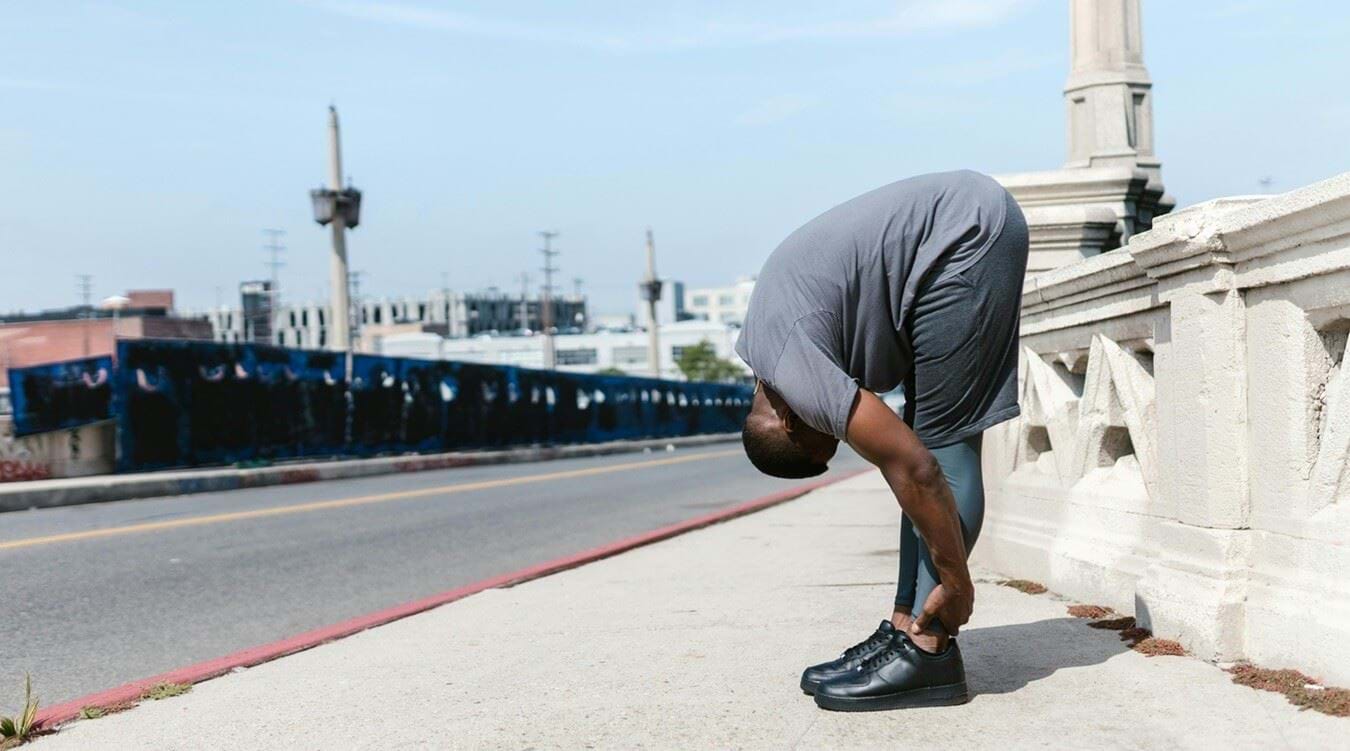
Chair Forward Bend - Uttanasana
Strengthens: Hip flexors, shoulders Stretches: Back, hamstrings, neck
- On an exhalation, bend forward over the legs so that your chest lies on the thighs if possible. Let the hands rest on the floor if they reach it. Let the head hang heavy.
- On an inhalation, raise the arms back up over the head. Repeat this movement between a raised arms position and a forward fold several times, moving with the breath.
Chair Extended Side Angle - Utthita Parsvakonasana
Strengthens: Back, shoulders, neck Stretches: Chest, core, shoulders, hips
- After your final forward bend, stay folded. Bring your left fingertips to the floor on the outside of your left foot. If your left hand doesn't come easily to the floor, place a block under it or bring it to your left knee instead and twist from there.
- Open your chest as you twist to the right on an inhale, bringing your right arm up above your head and gazing up at the ceiling. This is your chair version of extended side angle pose. Hold here for several breaths. Bring the right arm down on an exhale.
- Do the same position with the right arm down and the left arm up.
Chair Pigeon - Eka Pada Rajakapotasana
Stretches: Glutes, hip flexors, lower back
- Come back up to sit. Bring your right ankle to rest on your left thigh, keeping the knee in line with your ankle as much as possible. Hold this chair pigeon for three to five breaths.
- You may forward bend to intensify the stretch if you like.
- Repeat with the left leg.
Chair Eagle - Garudasana
Strengthens: Core, legs
Stretches: Shoulders, back, legs
- Cross your right thigh over your left thigh for eagle pose. If you can, wrap the right foot all the way around the left calf.
- Cross your left arm over the right one at the elbow. Bend your elbows and bring your palms to touch.
- Lift the elbows while dropping the shoulders away from the ears. Hold three to five breaths.
- Repeat on the other side.
Chair Spinal Twist - Ardha Matsyendrasana
Strengthens: Core
Stretches: Back, core, shoulders, glutes
- Come to sit sideways on the chair, facing to the left. Twist your torso toward the left, holding onto the back of the chair, for a spinal twist.
- Lengthen your spine on each inhale and twist on each exhale for five breaths.
- Move your legs around to the right side of the chair and repeat the twist to the right side.
Chair Warrior I - Virabhadrasana I
Strengthens: Shoulders, arms, legs, glutes, core
Stretches: Hips, chest, back
- Now keep the right leg in position over the side of the chair while you swing the left leg behind.
- Plant the sole of the left foot on the floor roughly parallel to the seat of the chair and straighten the left leg, so you are standing but supported by the chair.
- Keep your torso facing over the right leg as you raise your arms up to the ceiling on a inhale coming to warrior 1. Hold for three breaths.
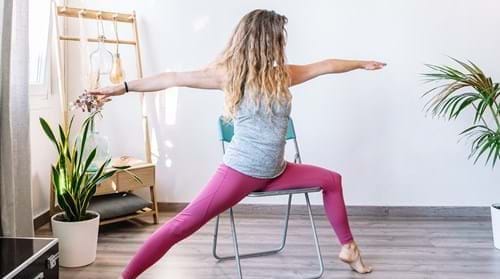
Chair Warrior II - Virabhadrasana II
Strengthens: Legs, glutes, shoulders, core
Stretches: Hips, shoulders, chest
- On an exhale, open up the arms with the right arm coming forward and the left arm going back.
- Draw the left hip back and turn the torso to the left, so that it is aligned with the front of the chair.
- Gaze out over the right fingertips and hold warrior II for three breaths.
Chair Reverse Warrior - Viparita Virabhadrasana
Strengthens: Shoulders, arms, legs, glutes, core
Stretches: Hips, chest, back, sides
- Let the left arm come down the left leg and lift the right arm up to the ceiling on an inhale for reverse warrior. Hold for three breaths.
- Bring both legs to the front of the chair before coming to sit sideways on the chair facing left and going through the series of three warrior poses on the left side.
Final Relaxation: Chair Savasana
Take a few minutes to sit with your eyes closed and hands in your lap at the end of your practice. This seated savasana will help your body absorb all the good effects of the poses you have done and transition you into the rest of your day.
Remember to maintain a comfortable and steady pace while performing these exercises, and always listen to your body. If you experience any discomfort or pain, adjust the movements accordingly. When starting a new exercise programme like chair yoga, we advise speaking with a healthcare professional first, especially if you have any pre-existing health concerns.
To learn more about getting started with yoga, check out our beginner yoga FAQs here. You can also find more exercise advice for seniors here.
Want to supplement your yoga practice with strength training? Find your nearest gym here.
FAQs on Chair Yoga for Beginners and Seniors
Is chair yoga effective for improving mobility and flexibility?
Yes, it can be. Chair yoga is a gentle way to keep joints moving and muscles stretching, which is especially helpful if you feel stiff or struggle with mobility. Because the chair takes the 'fear of falling' out of the equation, most people find they can actually stretch deeper and hold poses longer than they would standing up.
Can chair yoga help with weight loss or fitness goals?
Chair yoga is not about burning lots of calories, but it can still play a useful role in staying active. Regular practice helps build strength, improve movement and keep the body ticking over. For some people, it is a great starting point that builds confidence to do more exercise, while for others it works well alongside walking or strength training.
How often should beginners do chair yoga?
A good place to start is 2 to 4 times a week, keeping sessions short and manageable. Even 10 to 20 minutes can be enough to feel the benefits. As your body gets used to the movements, you may find you can practise more often, but there is no need to rush.
Are chair yoga exercises safe for seniors with limited mobility or balance issues?
That's exactly who this is for! The chair acts as your anchor. Unlike floor yoga, where getting up and down is the hardest part, chair yoga keeps you stable and secure. Always remember: if it pinches or hurts, back off. Your body knows better than any manual.
Can chair yoga build arm and upper body strength?
Yes, it can. Many chair yoga poses involve lifting and holding the arms, supporting your posture and moving with control. These actions all help strengthen the arms, shoulders and upper body over time. The changes are gradual, but they can make everyday tasks feel easier.
Do you need equipment like a yoga mat or yoga chair?
No special equipment is needed. A sturdy chair without wheels is usually all you need. A yoga mat or folded towel can be useful for comfort or to support your feet, but they are completely optional.
Can chair yoga be done entirely at home without an instructor?
Yes, and many people prefer it that way. Once you've got a handle on the basic alignment, it's a very intuitive practice. Just make sure you're in a clear space where you won't hit your hands on a table, put on some music you like, and move at a pace that feels good for you.
Can chair yoga be done from an armchair?
An armchair is fine as long as it's firm. The only downside is that the arms can get in the way of your side stretches or twists. If you feel restricted, try scooting forward to the edge of the seat. Just make sure the chair isn't prone to tipping!
When starting a new exercise programme like chair yoga, we advise speaking with a healthcare professional first, especially if you have any pre-existing health concerns.
To learn more about getting started with yoga, check out our beginner yoga FAQs here. You can also find more exercise advice for seniors here, such as our core exercises for seniors.
Want to supplement your yoga practice with strength training? Find your nearest gym here.
Related Articles