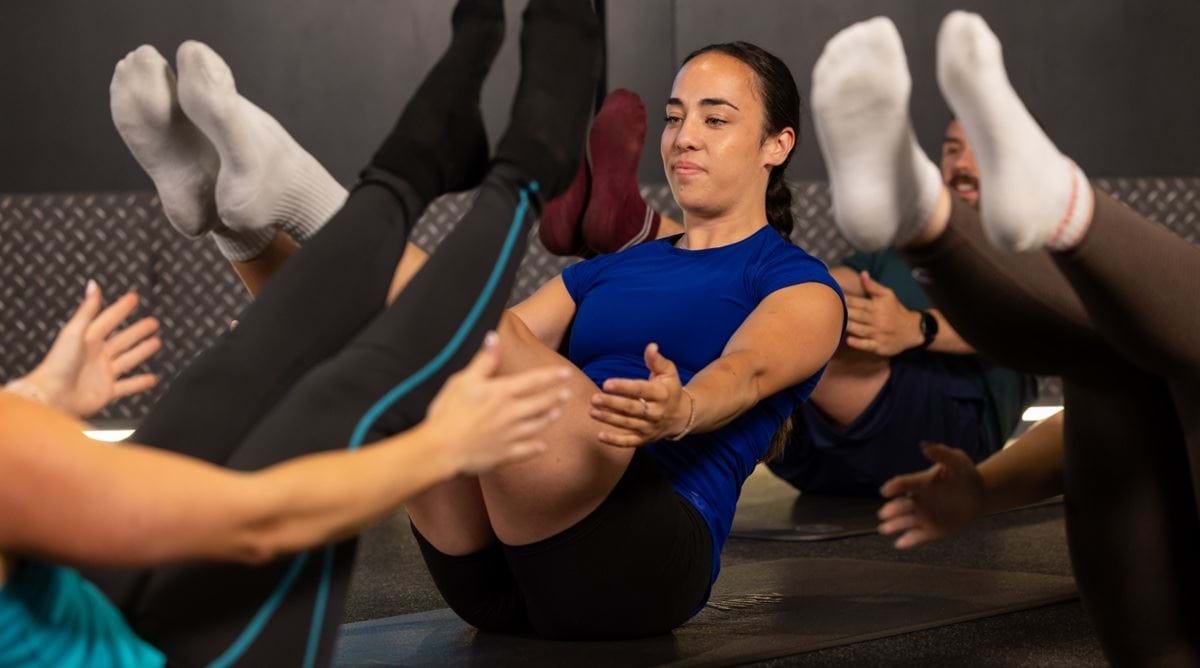
How Much Exercise is Too Much? Understanding Your Limits

How Much Exercise Is Recommended | Signs You're Over Exercising | What Is Overtraining Syndrome | What Causes Overtraining | How Much Is Too Much | Preventing Overtraining | Recovering From Overtraining | FAQs
Page updated: 18^th^ February 2026
Regular exercise is vital for your overall health and your fitness levels, but more isn't always better. Doing too much exercise without adequate recovery can turn into overtraining, especially if this goes on for long periods of time.
Whether you're a beginner or used to pushing your limits in the gym, knowing how to balance training and recovery is key to improving your health and reaching your goals without burning out or getting injured.
In this blog, PureGym Personal Trainer Flyn Woodward looks at how exercise a week you should do, how much exercise is too much, and everything you need to know about overtraining.
Quick summary
Adults should aim for a minimum of 150 minutes of moderate exercise plus two strength sessions a week
This can be increased to 300 minutes depending on your health and fitness goals
Over exercising can lead to symptoms like fatigue, mood swings, and poor recovery
Frequently overexercising can lead to overtraining syndrome, a condition which impacts several biological processes
To prevent overtraining, you should balance exercising with recovery, stress management, and good nutrition
Recovering from overtraining involves taking a break and then reducing your workouts
How often should you exercise?
Before we look at how much exercise is too much, let's look at how much exercise per week is recommended.
How many hours of exercise a week should you do at a minimum?
For healthy adults aged 19-64, the minimum exercise guidelines are:
150 minutes of moderate intensity aerobic activity (e.g. brisk walking, cycling) or 75 minutes of vigorous activity a week (e.g. running, swimming)
Strengthening all major muscle groups twice a week
An average full body strength training workout can take around 45-60 minutes, bringing it up to a total of 240-270 minutes or 4-4.5 hours of exercise to do a week for most adults at minimum. Adults 65+ have the same exercise recommendations, but their strength workouts should also incorporate activities that improve balance and flexibility.
How much to exercise per week for different goals
The NHS guidelines are for the minimum amount of exercise the average person needs to reduce health risks and lower mortality rates. For additional health benefits such as weight loss, this can be increased to 300-600 minutes of moderate activity a week:
Weight loss: For weight loss, aim for around 150-300 minutes of moderate intensity exercise a week or 75-150 minutes of vigorous activity, as well as 2+ strength sessions. This helps to burn more calories, making weight loss easier. Avoid exercising over this amount, as you won't be eating the calories to recover from extreme levels of exercise.
Reduced mortality: 150 minutes of exercise will reduce your mortality risks, but studies show that increasing this to 300 minutes a week has an even further impact. After this, reductions are minimal for the amount of time you put in.
Athletic performance: For ultimate athletic performance, you can go up to 600 minutes of moderate exercise a week.
For improved strength and muscle mass, you can also increase the amount of strength training each week as long as you allow each muscle group a full day to recover between sessions. You can do this by splitting your workouts into different muscle groups, which allows to work each muscle group 2-3 times a week with rest in between. Learn more about splitting workouts by muscle groups here.
How many times a week should you exercise?
Doing a little exercise on most days of the week is better than doing a lot of exercise just one or two days a week. It's recommended to spread your exercise over at least 4-5 days a week, with some kind of movement every day.
How much exercise per day is healthy?
To achieve the minimum exercise guidelines across the week, you would need to do around 30 minutes of moderate exercise each day (including your strength training), with 30-60 minutes optimal for most people.
Being sedentary most of the day increases health risks so on top of this, you should be getting up and moving regularly throughout the day -- but can you exercise too much?
While it is safe to exercise every day, you should be factoring in rest and recovery each week. Exercising too much can be harmful, eventually leading to overtraining syndrome (OTS), a condition with symptoms like fatigue, poor performance, reduced recover, and more.
9 signs you might be exercising too much
Most people only realise they are overtraining when their workout performance begins to suffer, but there are other symptoms you might be unaware of.
Get to know the common symptoms of over working out so you can take action before you slip into overtraining territory. Here's what to watch out for:
- Persistent tiredness, including when you wake up.
- Decreased training performance even if effort feels high.
- Picking up illnesses and being unable to shake them off.
- Mood changes including low mood or irritability.
- Muscle or joint pain that doesn't go away in a couple of days.
- Changes in sleeping including less or more than usual.
- Decreased appetite or enthusiasm about food.
- Elevated resting heart rate.
- Irregularities in menstrual cycle and pre-menstrual symptoms.
If you are experiencing multiple of these symptoms, it can be helpful to take a break from all activity for 1-2 weeks and then adjust your training to allow for more recovery. You can use this time to assess your nutrition, sleep, and stress too.
What is overtraining syndrome?
Overtraining happens when a person does not give their body enough time to recover between workouts, over a prolonged period. Overtraining syndrome is a condition where excessive exercise leads to a series of systematic changes in your body, causing a variety of physical and mental symptoms including fatigue, decreased performance, and mood swings.
If you're experiencing symptoms of over working out, you'll need to take steps to recover. There are different stages to overtraining:
Acute fatigue (pre OTS)
Improving performance requires the muscles and nervous system to be overloaded, placing enough tension to cause the body to adapt. Under this amount of training load, it is normal for people to experience acute fatigue and some soreness for 1-2 days after working out as the body recovers from training. This is accompanied by an increase in performance once recovered.
- Recovery: 1-2 days
- Impact on performance: Consistently improves over time
Stage 1: functional overreaching
During early stages of overtraining, symptoms are mild but longer lasting, and include increased fatigue, persistent soreness, small but temporary decreases in performance, and elevated resting heart rate. If overtraining ends and is followed by adequate recovery, the body adapts and performance is improved.
- Recovery: 1-4 weeks
- Impact on performance: Temporary decrease followed by improvement
Stage 2: non functional overreaching
As overtraining continues, symptoms become more severe and longer lasting. At this stage, there is an increase in stress hormones and sympathetic nervous system activity, with symptoms including higher stress levels, poor sleep quality, irritability, and brain fog, in addition to ongoing muscle soreness and fatigue. People are more prone to minor illnesses and injuries, and performance stagnates or begins to decrease.
- Recovery: 1-3+ months
- Impact on performance: Stagnates or decreases
Stage 3: parasympathetic overtraining
The final stage of overtraining syndrome can have severe impact to physical, psychological and hormonal health. At this point, the parasympathetic nervous system is involved, leading to symptoms such as severe fatigue, insomnia, depression and anxiety disorders, hormonal imbalances, and increased injuries. Performance is decreased and often accompanied by reduced motivation to train.
- Recovery: Months to years
- Impact on performance: Severely decreased
What causes overtraining
Overtraining happens when your training output and recovery input don't match up. Consistently over exercising and under recovering causes a maladaptive response in multiple biological systems in the body, resulting in symptoms like fatigue, insomnia, soreness, and decreased performance.
Here are the key things that can lead to overtraining:
- Not enough recovery time. Although it's safe to exercise daily, you need at least 1-2 rest days a week. That means no working out, but movement like walking or gentle stretching is fine. You should also factor in weeks throughout the year where you rest or reduce the volume of exercise you do.
- Poor nutrition and hydration: Your body needs enough calories, all three macronutrients (protein, fats, carbs), a variety of micronutrients (vitamins and minerals), and water to recover and refuel from working out.
- Poor sleep quality: Not getting enough good quality sleep negatively impacts how your body recovers, with studies showing less than 6-7 hours of sleep a night doubling injury rates.
- High levels of stress: Chronic stress can affect recovery, our immune systems, hormones, and sleep, making it harder for the body to recover from working out. If you are experiencing high levels of stress, particularly for long periods, you'll need to factor in more rest and recovery
- Sudden increases in training volume or intensity: Overtraining is often caused by long periods of training but it can be triggered quickly by increasing the amount and intense of exercise you do too fast. Stick to incremental increases each week of around 10% to avoid this.
How much exercise a day is too much?
While recovery plays a part in overtraining, there is such a thing as too much exercise. 90 minutes of moderate intensity exercise or 20-30 minutes of vigorous intensity exercise a day is the maximum for most people, although the limit may be lower for many people as it depends on fitness, stress levels, and recovery.
The occasional longer or more intense session is unlikely to cause overtraining syndrome, but consistently doing long or intense workouts or increasing the amount or intensity of exercise you do too quickly can trigger the early stages of overtraining.
How to prevent overtraining syndrome
Recovering from overtraining syndrome is possible but preventing it from developing in the first place is a much better option in the long term. Here are key ways to prevent overtraining.
Manage your workout intensity and volume: The first step in preventing overtraining is to not over train. Cap your training sessions at around 60 minutes for moderate intensity exercise and 30 minutes for high intensity exercise.
Factor in rest days: Aim for at least one full rest day each week. The higher intensity your workouts are, the more rest days you'll need.
Progressive overload: Increase the intensity of your workouts gradually over time to allow the body to adapt. Aim for around 5-10% increase each week.
Periodise your workouts: Periodisation is a way of structuring your workouts over time to improve progression while preventing injuries and plateaus. An easy way to do this is to set 4-6 week training blocks where you progressively increase the intensity or volume of your workouts, followed by a deload week where you significantly reduce training or take a break. This allows your body to fully recover from the training block and prevent overtraining.
Ramp up your nutrition: Make sure you are eating enough carbs to fuel your workouts, enough protein for recovery, enough fats for your biological systems, and enough calories overall -- you can see how to calculate how much you should eat here.
Get a good night's sleep: Aim for at least 7-8 hours of quality sleep a night. A simple way to improve your sleep quality is avoiding screens, intense exercise, and highly stressful or stimulating media in the hour before bed.
Reduce your stress response: Although you can't prevent stressful events in your life, you can change how you respond to them. Work on reducing your stress response with strategies like deep breathing, meditation, and journaling, and implement boundaries to reduce how much stress you experience.
How to recover from overtraining
If you're reading this and it's too late to prevent overtraining syndrome, don't worry: recovering from overtraining is possible. The amount of time it takes to recover from overtraining syndrome depends on how long you've been overtraining and the severity of the syndrome, but the process is the same:
Stop exercising: The first step to treating overtraining is to pause all exercise for a minimum of 1-2 weeks, to allow your body to start the recovery process.
Reduce your training: Once your rest is over, you'll need to adjust your workouts to avoid overtraining again. Aim for an initial 50% reduction in either intensity, volume, or load, or switch to low intensity activities like yoga and walking.
Increase rest days: Add at least one full rest dayv each week in addition to current rest days, for a minimum of two rest days a week.
Introduce deload weeks: Every four weeks, factor in a deload week where you reduce your workouts by at least 50%.
Increase your nutrition: Make sure you're getting enough calories, carbs, protein, and fats, as well as plenty of vitamins and minerals, to fuel your recovery and exercise. Aim for plenty of hydration too.
Reduce stress: Practice techniques to lower your stress such as mindfulness, breathing exercises, and journaling.
Listen to your body: Pay attention to your fatigue levels, muscle soreness, performance, and mood -- these should improve if you are recovering from overtraining. If they plateau or decrease, it can be a sign you're still overtraining or under recovering.
It can be challenging for people who do exercise a lot to reduce their training, but this is the only way to recover from overtraining syndrome. While it can be challenging, continuing to overtrain can lead to long term health issues that take years to improve. Tackling the issue as early as you can will make the recovery process quicker and will ultimately allow you to improve your performance sooner.
As your energy and performance increases, you can slowly increase your training over time. Remember to keep the intensity and amount of exercise you do capped to prevent overtraining in the future.
FAQs about overtraining
Is overtraining real or a myth?
Overtraining and overtraining syndrome is real and can have harmful effects. People who regularly exercise more than they recover are at risk of overtraining.
What does overtraining feel like?
Common signs of overtraining include persistent fatigue, muscle soreness, and poor moods. You may lack the energy and motivation to work out, and when you do work out you might find your performance has decreased and you don't recover between sessions.
Can overtraining cause weight gain?
Yes -- overtraining can cause weight gain as a result of hormonal imbalances, appetite dysregulation, or decreased training due to fatigue and soreness.
Am I overtraining or undertraining?
If you are experiencing persistent fatigue and soreness and a decrease in performance that isn't temporary, you might be overtraining. If you are not seeing progress but aren't experiencing acute fatigue or soreness after workouts, you might be undertraining.
Does overtraining cause flu-like symptoms?
Overtraining can cause fatigue, muscle soreness, and brain fog, which are all also flu symptoms. Overtraining can also weaken the immune system and make you more susceptible to colds and flu.
Is overtraining the same as under recovery?
Overtraining happens when there's too much exercise and not enough recovery. Overtraining and under recovery are two sides of the same coin.
How many hours of exercise a week is too much?
Exercising more than 90 minutes a day or 600 minutes (10 hours) a week is likely to lead to overtraining in most people. Around 30-60 minutes of exercise, 5-6 days a week is a good goal as it offers multiple health benefits while allowing for enough recovery.
Can exercising every day slow muscle growth or weight loss?
Exercising every day can slow muscle growth as the body repairs and builds muscle during recovery, not while working out. It can also slow weight loss by increasing appetite and impacting stress levels which can indirectly cause weight gain.
What is the difference between overtraining and just being tired?
Overtraining causes persistent fatigue, decreased performance, and muscle soreness that doesn't go away with rest. Normal tiredness is short term and does not impact performance.
How long does it take to recover from overtraining?
The recovery time from overtraining depends on how long you have been overtraining, how severe the symptoms are, and what stage you're at. For those in the early stages, recovery can take as little as 1-2 weeks of rest, as long as your exercise levels are adjusted after. More severe overtraining syndrome can take months for your biological systems to fully recover, although symptoms will ease before then.
How can beginners avoid exercising too much?
The best way for beginners to avoid overexercising is to gradually increase your exercise over a period of weeks and to listen to your body. You could start with adding 30 minutes of moderate exercise three times a week, with a full rest day between each workout. After you've had a few weeks to adjust, you can add an extra workout, increase the workout times, or increase the intensity a little bit each week. If you find recovery is taking more than 2-3 days or your energy levels, soreness, and mood are declining, scale back or add extra rest days.
Is working out every day bad?
Working out every day isn't bad if it's done in a way that allows you enough rest and recovery, for example if 1-2 of your workouts are low intensity such as gentle yoga or walking. It's not advisable to do moderate or high intensity workouts every day as your body needs time to recover. Try aiming for a mix of 3-5 moderate to high intensity workouts each week and low intensity movement on the other days.
If you need help with creating a balanced programme, speak to one of our Personal Trainers. Find a PureGym near you to get started.
Related Articles