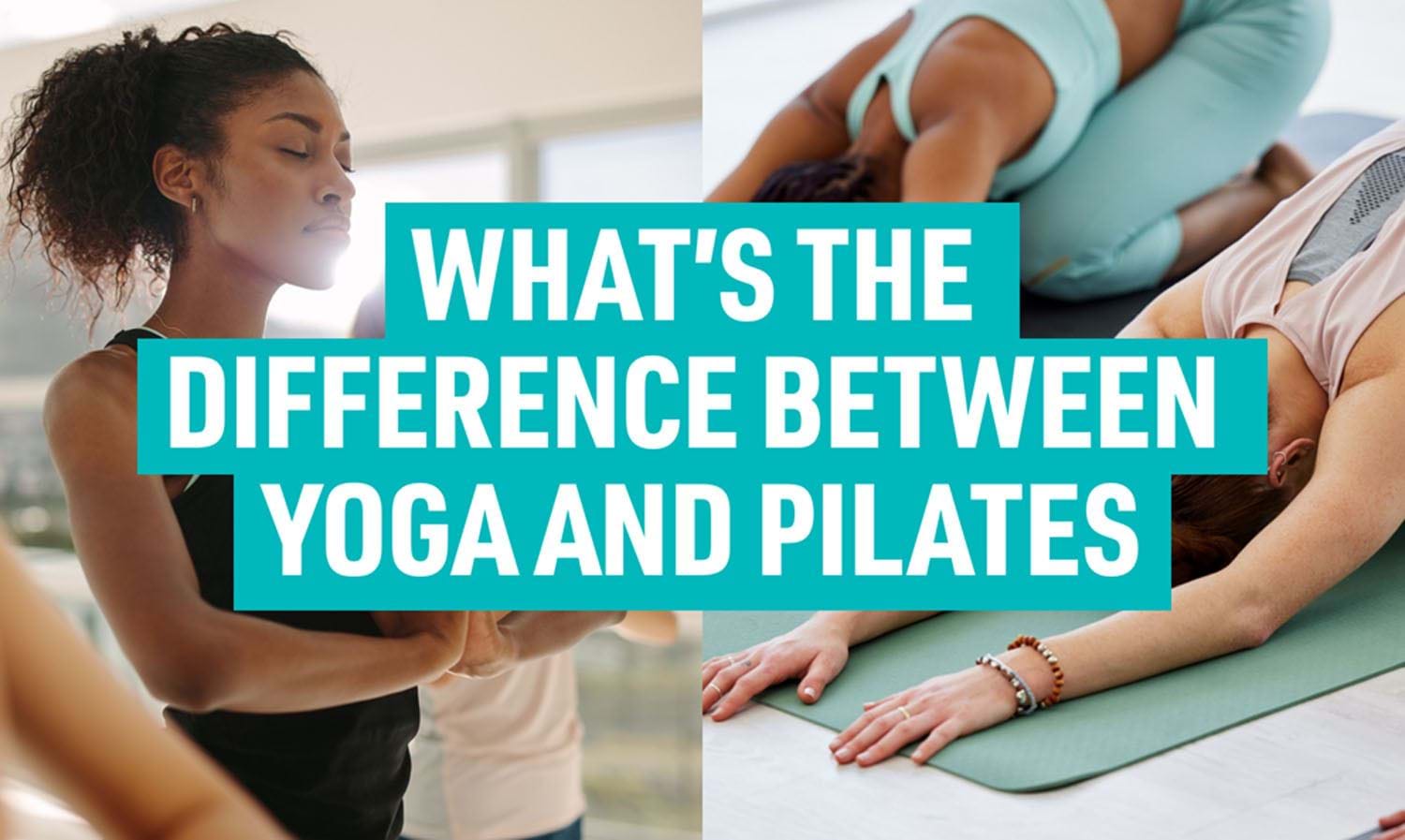
What’s The Difference Between Yoga And Pilates?
Differences | Similarities | What is yoga | The benefits of yoga | What is Pilates | The benefits of Pilates | Which is better: yoga or Pilates | Combining | What you need | FAQs
Page last updated: 26th March
Trying to choose between yoga and Pilates? Both are brilliant for building strength, moving better, and feeling more confident in your body, but they're not the same thing.
If you've ever wondered which one's best for you, it usually comes down to what you want more of right now: flexibility and switch-off time, or core strength and full-body control.
At a glance: the main differences between yoga and Pilates
Yoga and Pilates can look similar from the outside, but each gives different results. Yoga is usually more about mobility, flexibility and breath-led movement, while Pilates focuses more heavily on controlled strength, stability and posture.
The simplest way to think about it:
- Yoga is often a mix of stretches, held shapes and flowing sequences. You'll spend time opening up tight areas and using your breath to help you move.
- Pilates is more like a calm strength session. You'll do controlled reps and holds, with lots of focus on form, alignment and your core doing the work.
- Breathing is important in both, but in yoga, it often sets the rhythm of the movement. In Pilates, it's used to help you stay stable and controlled.
- How it feels afterwards: yoga tends to leave you feeling looser and more relaxed; Pilates often leaves you feeling 'switched on' through your core, glutes and posture muscles.
- Both can be tough, just in different ways. A slow yoga class can still be a workout, and a Pilates class can have you shaking by the end.
Similarities between yoga and Pilates
Even though they feel different, yoga and Pilates have a lot in common:
- Both are mind and body practices that help with strength, mobility and body awareness
- They both emphasise the importance of breathing properly during exercise
- They can both be done with minimal equipment
- Both can improve strength and flexibility
- They share some exercises (under different names)
- Both can be low-impact and joint-friendly (depending on the class)
- Both can be adapted for different abilities and experience levels
- Both can support other training, like running, cycling and weight training
What is yoga?
Yoga is a mind-body practice that uses postures (poses), breathing and controlled movement. Some yoga classes are slower and more stretchy, while others are more dynamic and strength-based. Either way, yoga is all about moving with intention and paying attention to how your body feels.
What to expect in a yoga class
If you've never tried yoga before, a class will usually include:
- A gentle warm-up to loosen the body
- A mix of poses, which might be held for a few breaths or linked together in a flow
- Plenty of cues around breathing and posture
- A slower finish, often with a short relaxation at the end
And a common myth to clear up: you don't need to be flexible to do yoga. Flexibility is something you build over time.
The benefits of yoga
Studies like this paper in the National Library of Medicine have shown a wide range of amazing benefits from yoga, which explain why it's so popular around the world. In particular, it can help with:
- Mobility and flexibility (especially hips, hamstrings, shoulders and upper back)
- Balance and coordination
- Breathing and stress management
- Posture awareness and how you hold yourself day to day
Feeling calmer and more reset after a busy week
What is Pilates?
Pilates is a form of exercise built around control, alignment and strength. It's often described as being core-focused, but a good Pilates class is full-body.
While physically, Pilates is a mix of calisthenics, yoga, and ballet, it places more emphasis on doing well-defined, focused movements to align the spine. There are six key principles of Pilates: breathing, centring, concentration, control, flow, and precision.
What to expect in a Pilates class
A typical Pilates class often includes:
- Breathing and activation cues to help you find good alignment
- Controlled movements for the core, hips and glutes
- Exercises that look simple, but feel surprisingly intense when done slowly and properly
- Options to make movements easier or harder
Pilates can be great for building confidence because you can really feel your control improving as you practise.
The benefits of Pilates
Again, there are many proven scientific benefits to consistent Pilates (like this study in ScienceDirect). People often choose Pilates because it can help with:
- Core stability and feeling more supported through the middle of your body
- Posture and alignment, especially if you sit a lot
- Glute and hip strength (a big part of moving well)
- Strength endurance without heavy weights
- Better control and coordination in everyday movement
Yoga vs Pilates: which is better for you?
Yoga and Pilates are both low impact exercises which can help to increase your strength and flexibility, so which one should you choose? Well, there isn't one 'winner'. The best choice is usually the one that fits your goal, your schedule, and what you'll actually enjoy doing consistently.
If you're on the fence, it can help to think about what you're looking to experience and your ultimate goals.
Yoga vs Pilates for beginners
Both are beginner-friendly, and you don't need to be fit, flexible or a fitness expert to start.
A simple way to decide:
- If you like the idea of structured exercises and clear guidance on best form, Pilates often feels easier to follow.
- If you want something that feels more like stretching, moving and generally switching off, yoga can be a great first step.
Wondering where to get started? Our beginners yoga FAQs and what is Pilates guides answer some of the most common questions we hear at PureGym.
Yoga vs Pilates for weight loss
If your main goal is weight loss, it's worth setting expectations early: neither yoga nor Pilates is a magic shortcut. Results usually come from consistency, overall activity levels, and what you're doing outside the gym, too (particularly with your diet and nutrition).
That said, both can support weight loss in different ways:
- Pilates can build strength and muscle endurance, helping you feel firmer and move more confidently.
- Yoga can support recovery, stress, sleep and mobility, making it easier to stay active and stick to a routine.
If weight loss is your main focus, a solid approach is to combine one or two Pilates or yoga classes a week with regular walking, or another form of cardio you enjoy. Add some strength training if you can (even just a simple plan) for an effective, well-rounded fitness routine.
Yoga vs Pilates for flexibility and mobility
If flexibility is top of your list, yoga usually gives you more dedicated stretch time, especially in slower classes.
Pilates can still help with mobility, but it often does it through controlled strength through range, rather than long holds.
A lot of people find the best mix is:
- Yoga for opening up tight areas and staying supple
- Pilates for building the control and stability to use that flexibility well
You can learn more about mobility and flexibility in our guide here.
Yoga vs Pilates for posture (and back comfort)
A lot of people look at yoga or Pilates because they sit at a desk all day and feel stiff or slumped. The stretching and strengthening movements are often viewed as a way to treat back pain or discomfort.
While everyone's different, many people find:
- Pilates helps because it strengthens the muscles that support posture, especially the core, glutes and upper back.
- Yoga helps because it improves mobility in areas that commonly feel tight, like hips, chest and upper back, and builds awareness of how you're holding yourself.
If you're dealing with ongoing pain, an injury, or anything that doesn't feel 'normal', it's always worth getting proper advice, and telling your instructor so they can offer options.
Yoga vs Pilates for core strength
If your main goal is core strength, Pilates is usually the most direct route. A lot of the class is built around controlled core engagement and keeping your body stable while you move.
Yoga builds core strength, too, especially in classes that include holds like plank variations and balance work, but it tends to be less focused on that than Pilates.
Yoga vs Pilates for stress and mindfulness
Yoga is often the first choice if you want a class that helps you slow down and reset. Breath-led movement and relaxation are a big part of many yoga classes.
Pilates can still be surprisingly mindful, though, because you have to concentrate on control, breathing and technique. For some people, that focused feeling is what helps them switch off.
Can you do yoga and Pilates together?
Yes, and they often work really well as a pair. You can use yoga to stay mobile and recover well, and Pilates to build strength and control.
A few simple weekly ideas:
- New to both? One yoga and one Pilates sessions
- Want to feel stronger? Two Pilates and one yoga session
- Want to feel more mobile and relaxed? Two yoga and one Pilates session
If you're doing both, spreading them out through the week can help you feel fresher and get more from each class.
What do you need for yoga or Pilates?
You don't need much to start.
- Clothing: something comfortable you can move in
- Footwear: usually barefoot (or grippy socks if you prefer)
- Mat: a yoga mat is fine for both. If you've got sensitive knees or wrists, a slightly thicker mat can feel more comfortable
Extras: water, and a small towel if you tend to get warm
FAQs on the difference between Pilates and yoga
Is yoga harder than Pilates?
It depends on the class. Some yoga styles are slow and stretchy, others are strong and sweaty - check out our guide to the different types of yoga to find out the best style for you. Pilates often feels calm, but it can be intense because you move slowly with control. Both can challenge you in different ways.
How often should I do yoga or Pilates to see progress?
Most people notice changes with two to three sessions a week, but even once a week can make a difference if you're consistent. Progress usually shows up as feeling stronger, moving better, and finding classes easier to follow.
Can I do yoga or Pilates if I'm not flexible?
Absolutely. You don't need flexibility to begin. In fact, classes are one of the ways you build it over time. Start where you are and use the options your instructor gives you.
Can yoga or Pilates help posture?
Many people find they do, especially if you sit a lot. Pilates can build strength in the muscles that support posture, and yoga can help you move more freely and become more aware of alignment. If you have pain or an injury, get proper advice and tell your instructor. You can find out more about mobility exercises to ease tension and improve posture here.
Ready to try yoga or Pilates (or both)?
If you're still not sure, the best way to decide is to try a class (or try both) and see what you enjoy. Many people end up mixing yoga and Pilates throughout the week because they each bring something different.
Explore PureGym yoga classes and Pilates classes, and check your local timetable to find a session that suits you. Not a member yet? You can sign up here.
Related Articles