Marathon Difficulty Index: Ranking the Hardest and Easiest Marathons Worldwide

Whether you're a seasoned marathon runner or contemplating your first-ever running challenge, it's helpful to know that not all marathons are created equal, despite all having the same 26.2 miles distance. The conditions vary from city to city and while some marathons feature flat and PB-friendly courses and ideal weather conditions, others throw wind, hills and altitude at you, testing even the toughest of legs.
With the rise of fitness-focused travel (highlighted as a key 2026 wellness trend by
Vogue), more runners are now planning holidays around major global races. Although choosing a marathon solely on location can be tempting, understanding the course and climate you'll need to tackle can help you to find a marathon and tailor your training to get your best results.
This is why we have set out to determine the hardest and easiest marathons in the world. The result? A definitive marathon difficulty index that helps you choose the right race for your ability, goals and training needs.
From desert routes with searing temperatures to high-altitude climbs that put your strength and endurance to the test, our marathon difficulty index gives runners a data-backed look at what makes each event challenging. To further help runners to prepare for their chosen marathon, we've also gathered advice on how to take these difficulty factors into account and - crucially - how to adapt their training to suit their race's conditions.
How we measured marathon difficulty
To objectively determine the easiest and most difficult races, we analysed more than 100 global marathons using a consistent set of metrics. These included altitude, elevation difficulty, typical race-day temperature, average race-day wind speed, and average finishing times. We assessed each factor individually and in combination to make an index, identifying patterns that suggest the difficulty levels of each race.
Elevation and altitude were considered because of their impact on terrain difficulty and access to oxygen, both of which directly affect aerobic output and fatigue. Temperature and wind were included to reflect how weather influence hydration levels, your ability to pace properly and general energy expenditure. Finally, average finishing times were included as an indicator of real-world difficulty, showing how runners actually perform under these conditions rather than relying on theory alone.
Taken together, these metrics allow for a balanced view of marathon difficulty. Rather than labelling a race as simply “hard” or “easy,” the analysis highlights how terrain, climate and physiological strain interact to shape the overall experience.
The hardest marathons in the world
How hard is a marathon? This is the question that every potential marathoner asks themselves before signing up for a race. All marathons are hard but when you look beyond the 26.2-mile distance, factors like altitude, elevation, terrain and climate quickly separate challenging races from truly extreme ones.
At the top of our ranking is the Everest Marathon in Nepal, which starts near the Mount Everest Base Camp with very high altitude of well over 5,000 metres or 17,000 feet. As a result, reduced oxygen levels, freezing temperatures and steep terrain make this one of the most physically demanding marathons in the world, which on average takes nearly 9 hours to complete.
The Great Wall Marathon in China ranks second for similar reasons - the route has a relentless elevation profile, including thousands of uneven stone steps. Unlike the Everest Marathon however, this race comes with relatively high temperatures and strong winds and you've got yourself a challenging race.
High altitude and high temperatures also play a major role in runs such as the Mexico City Marathon and Nairobi Marathon in Kenya, where hot and thin air can significantly impact endurance and pacing abilities.
Closer to home, the UK's Beachy Head Marathon in Eastbourne and Eryri Marathon in Snowdonia demonstrate how steep climbs, trail terrain and unpredictable weather can dramatically increase difficulty. Meanwhile, the Patagonian International Marathon in Argentina highlights how strong winds and remote landscapes can add another layer of challenge.
The 10 most difficult marathons in the world
- Everest Marathon, Nepal
Elevation Difficulty (m): 2565.00
Altitude (m): 5190.00
Average temperature (Celsius): 22
Average wind speed (km/h): 15.00
Average finish time: 8:50:35
Total Score: 90.72
- Great Wall Marathon, China
Elevation Difficulty (m): 1217.50
Altitude (m): 493.00
Average temperature (Celsius): 21
Average wind speed (km/h): 18.00
Average finish time: 6:08:51
Total Score: 59.05
- Nairobi Marathon, Kenya
Elevation Difficulty (m): 409.50
Altitude (m): 1800.00
Average temperature (Celsius): 20
Average wind speed (km/h): 17.10
Average finish time: 4:39:00
Total Score: 58.33
- Mexico City Marathon, Mexico
Elevation Difficulty (m): 731.00
Altitude (m): 2296.00
Average temperature (Celsius): 19
Average wind speed (km/h): 6.90
Average finish time: 4:47:33
Total Score: 58.29
- Beachy Head Marathon, United Kingdom
Elevation Difficulty (m): 1698.00
Altitude (m): 196.00
Average temperature (Celsius): 12
Average wind speed (km/h): 25.50
Average finish time: 5:50:22
Total Score: 55.37
- Patagonian International Marathon, Chile
Elevation Difficulty (m): 1192.50
Altitude (m): 351.00
Average temperature (Celsius): 5
Average wind speed (km/h): 21.30
Average finish time: 4:58:00
Total Score: 53.87
- Eryri Marathon (Snowdonia), United Kingdom
Elevation Difficulty (m): 1071.00
Altitude (m): 376.00
Average temperature (Celsius): 10
Average wind speed (km/h): 23.70
Average finish time: 5:27:00
Total Score: 53.82
- Cybi Coastal Marathon, United Kingdom
Elevation Difficulty (m): 847.50
Altitude (m): 211.00
Average temperature (Celsius): 16
Average wind speed (km/h): 22.80
Average finish time: 5:03:00
Total Score: 53.03
- Bali Marathon, Indonesia
Elevation Difficulty (m): 387.50
Altitude (m): 129.00
Average temperature (Celsius): 28
Average wind speed (km/h): 13.50
Average finish time: 5:06:00
Total Score: 51.36
- Farnham Pilgrim Marathon, United Kingdom
Elevation Difficulty (m): 1001.50
Altitude (m): 172.00
Average temperature (Celsius): 13
Average wind speed (km/h): 18.10
Average finish time: 5:03:08
Total Score: 49.59
The easiest marathons in the world

The 10 easiest marathons in the world
While some marathons are defined by steep climbs and extreme conditions, others are designed to help runners perform at their best. Flat routes, low altitude, mild weather and consistent pacing conditions can all make a marathon more achievable, particularly for first-time runners or those aiming for a personal best.
Leading the rankings is Osaka Marathon in Japan, which boasts a largely flat course through the city, low elevation gain and stable winter temperatures. Similarly, the Bratislava Marathon in Slovakia and Milan Marathon in Italy rank highly thanks to their smooth urban routes and relatively predictable race-day conditions weather-wise.
The Houston Marathon in the US and Seville Marathon in Spain are well known among runners for their fast courses, combining minimal elevation with ideal temperatures that support consistent pacing. Spain also features again with the Valencia Marathon, widely regarded as one of the quickest marathon routes in the world.
Elsewhere, the Berlin Marathon in Germany attract elite runners chasing record times due to its famously flat profile, while the Battersea Park Marathon in London demonstrates how controlled, looped courses minimis the impact of environmental factors.
- Osaka Marathon, Japan
Elevation Difficulty (m): 86.50
Altitude (m): 27.00
Average temperature (Celsius): 7
Average wind speed (km/h): 14.90
Total Score: 10.98
- Bratislava Marathon, Slovakia
Elevation Difficulty (m): 76.00
Altitude (m): 144.00
Average temperature (Celsius): 12
Average wind speed (km/h): 4.60
Average finish time: 3:53:47
Total Score: 11.79
- Milan Marathon, Italy
Elevation Difficulty (m): 55.00
Altitude (m): 135.00
Average temperature (Celsius): 14
Average wind speed (km/h): 8.50
Average finish time: 4:11:00
Total Score: 12.67
- Houston Marathon, United States
Elevation Difficulty (m): 49.00
Altitude (m): 19.00
Average temperature (Celsius): 13
Average wind speed (km/h): 14.20
Average finish time: 4:12:00
Total Score: 13.72
- Seville Marathon, Spain
Elevation Difficulty (m): 59.00
Altitude (m): 20.00
Average temperature (Celsius): 13
Average wind speed (km/h): 13.50
Average finish time: 4:03:00
Total Score: 13.88
- Battersea Park Marathon, United Kingdom
Elevation Difficulty (m): 125.50
Altitude (m): 5.00
Average temperature (Celsius): 12
Average wind speed (km/h): 19.00
Total Score: 15.45
- Valencia Marathon, Spain
Elevation Difficulty (m): 69.50
Altitude (m): 26.00
Average temperature (Celsius): 12
Average wind speed (km/h): 15.40
Average finish time: 3:58:00
Total Score: 15.52
- Berlin Marathon, Germany
Elevation Difficulty (m): 46.00
Altitude (m): 51.00
Average temperature (Celsius): 15
Average wind speed (km/h): 15.50
Average finish time: 4:21:00
Total Score: 15.58
- Hannover Marathon, Germany
Elevation Difficulty (m): 64.50
Altitude (m): 63.00
Average temperature (Celsius): 9
Average wind speed (km/h): 15.10
Average finish time: 4:24:00
Total Score: 15.61
- Rome Marathon, Italy
Elevation Difficulty (m): 92.00
Altitude (m): 28.00
Average temperature (Celsius): 11
Average wind speed (km/h): 13.30
Average finish time: 3:21:50
Total Score: 15.72
The hardest marathons in the UK

The difficulty of marathons isn't just shaped by extreme climates or high altitude. In the case of races taking places in the UK, they are defined more by relentless elevation, exposed coastal routes and uneven terrain that challenge participants from start to finish.
Topping the rankings is the Beachy Head Marathon in Eastbourne, recognised for its steep climbs across the South Downs and volatile coastal winds. Close behind is the Eryri Marathon in Snowdonia, Wales, where runners face steady elevation through mountainous terrain, putting the pacing and energy management of even the most seasoned racers to the test. Their position as the UK's toughest races is not surprising seeing how they also featured in the ranking of the world's hardest marathons.
The Cybi Coastal Marathon, also in Wales, ranks similarly highly due to its combination of rolling climbs and raw coastal conditions, while the Farnham Pilgrim Marathon in Surrey is a technical trail with sharp elevation changes that can contribute to slow average finishing times. Further north, the Loch Ness Marathon in Inverness, Scotland, blends long descents with gradual climbs, creating a demanding course.
Across the top 10, elevation is the defining factor, showing that even without extreme heat or altitude, sustained hills and changing terrain can make UK marathons some of the most physically challenging races to complete.
The 10 most difficult marathons in the UK
- Beachy Head Marathon
Elevation Difficulty (m): 1698.00
Altitude (m): 196.00
Average temperature (Celsius): 12
Average wind speed (km/h): 25.50
Average finish time: 5:50:22
Total Score: 55.37
- Eryri Marathon (Snowdonia)
Elevation Difficulty (m): 1071.00
Altitude (m): 376.00
Average temperature (Celsius): 10
Average wind speed (km/h): 23.70
Average finish time: 5:27:00
Total Score: 53.82
- Cybi Coastal Marathon
Elevation Difficulty (m): 847.50
Altitude (m): 211.00
Average temperature (Celsius): 16
Average wind speed (km/h): 22.80
Average finish time: 5:03:00
Total Score: 53.03
- Farnham Pilgrim Marathon
Elevation Difficulty (m): 1001.50
Altitude (m): 172.00
Average temperature (Celsius): 13
Average wind speed (km/h): 18.10
Average finish time: 5:03:08
Total Score: 49.59
- New Forest Marathon
Elevation Difficulty (m): 428.00
Altitude (m): 63.00
Average temperature (Celsius): 15
Average wind speed (km/h): 20.60
Average finish time: 4:31:00
Total Score: 47.47
- Loch Ness Marathon
Elevation Difficulty (m): 371.00
Altitude (m): 296.00
Average temperature (Celsius): 12
Average wind speed (km/h): 19.60
Average finish time: 4:29:00
Total Score: 43.98
- Milton Keynes Marathon
Elevation Difficulty (m): 417.50
Altitude (m): 108.00
Average temperature (Celsius): 13
Average wind speed (km/h): 15.90
Average finish time: 4:27:00
Total Score: 43.89
- Isle of Wight Marathon
Elevation Difficulty (m): 271.00
Altitude (m): 50.00
Average temperature (Celsius): 12
Average wind speed (km/h): 25.30
Average finish time: 4:18:00
Total Score: 40.52
- Great Welsh Marathon
Elevation Difficulty (m): 244.50
Altitude (m): 18.00
Average temperature (Celsius): 7
Average wind speed (km/h): 21.20
Average finish time: 4:12:48
Total Score: 36.68
- Yorkshire Marathon
Elevation Difficulty (m): 285.00
Altitude (m): 41.00
Average temperature (Celsius): 10
Average wind speed (km/h): 14.30
Average finish time: 4:28:00
Total Score: 36.36
The easiest marathons in the UK
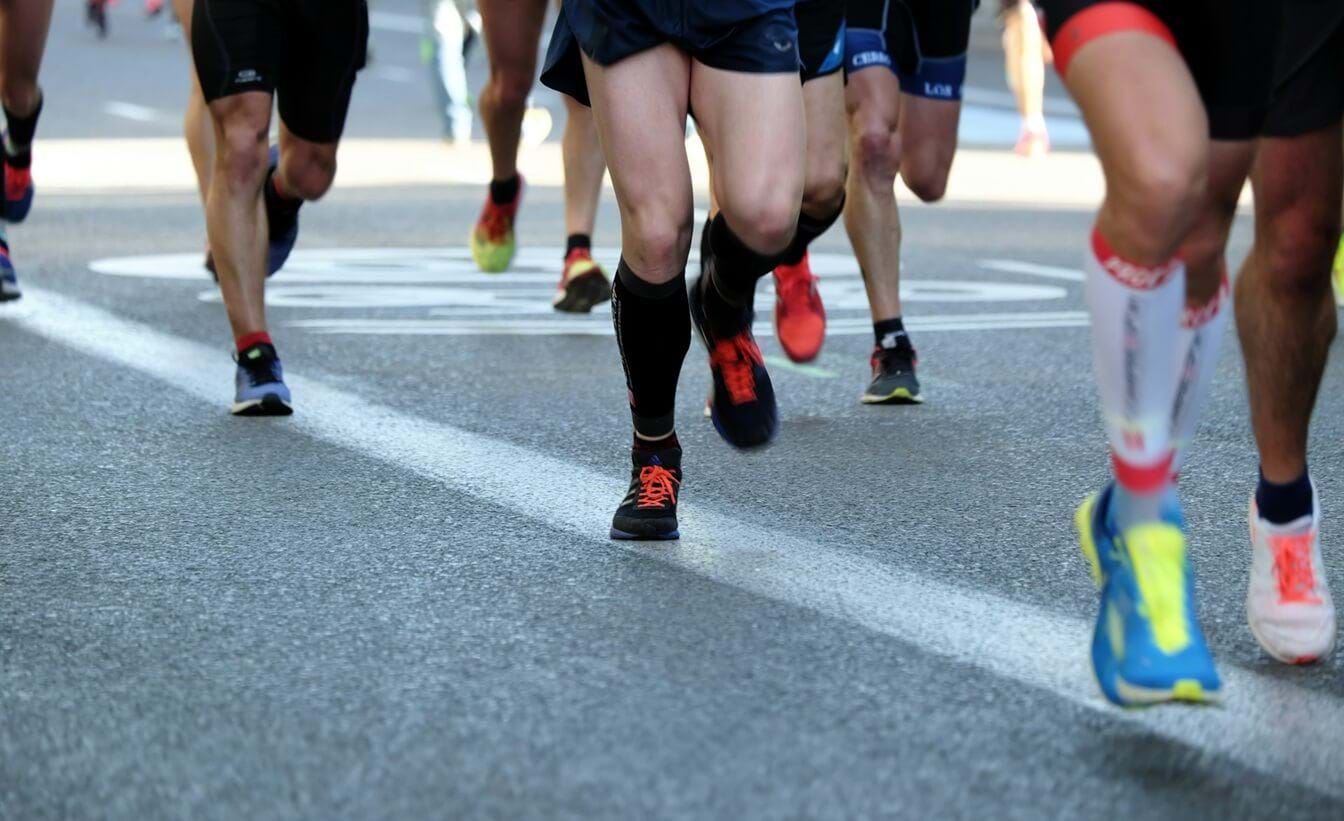
While every marathon is a challenge of endurance and mental resilience, some UK races offer more forgiving conditions thanks to flatter routes, lower altitude and steadier weather.
At the top of the ranking is London's Battersea Park Marathon, which features a flat, looped route that helps runners maintain a consistent pace with minimal elevation change. This is the reason this race is one of the easiest marathons to complete in the world, not only in the UK. The Manchester Marathon also ranks highly, widely regarded as one of the UK's fastest courses due to its flatness.
Coastal races such as the Blackpool Marathon and the Portsmouth Coastal Marathon benefit from low elevation, although exposure to strong sea winds can still influence performance.
The London Marathon remains one of the most attainable major races in the world, combining a relatively flat course with cool spring temperatures. Similarly, the Abingdon Marathon near Oxford and the Chester Marathon are known for their fast routes and consistent finishing times.
Further down the list, events such as the Brighton Marathon and the Edinburgh Marathon introduce slightly more elevation but still offer favourable conditions overall.
The 10 easiest marathons in the UK
- Battersea Park Marathon
Elevation Difficulty (m): 125.50
Altitude (m): 5.00
Average temperature (Celsius): 12
Average wind speed (km/h): 19.00
Total Score: 15.45
- Manchester Marathon
Elevation Difficulty (m): 59.50
Altitude (m): 44.00
Average temperature (Celsius): 9
Average wind speed (km/h): 17.50
Average finish time: 4:22:00
Total Score: 16.19
- Blackpool Marathon
Elevation Difficulty (m): 145.00
Altitude (m): 25.00
Average temperature (Celsius): 9
Average wind speed (km/h): 19.10
Total Score: 18.17
- Portsmouth Coastal Marathon
Elevation Difficulty (m): 15.00
Altitude (m): 8.00
Average temperature (Celsius): 6
Average wind speed (km/h): 26.10
Average finish time: 4:42:00
Total Score: 19.90
- London Marathon
Elevation Difficulty (m): 109.00
Altitude (m): 52.00
Average temperature (Celsius): 10
Average wind speed (km/h): 17.30
Average finish time: 4:23:00
Total Score: 20.55
- Abingdon Marathon
Elevation Difficulty (m): 115.50
Altitude (m): 71.00
Average temperature (Celsius): 11
Average wind speed (km/h): 19.00
Average finish time: 3:32:33
Total Score: 20.75
- Chester Marathon
Elevation Difficulty (m): 112.00
Altitude (m): 31.00
Average temperature (Celsius): 11
Average wind speed (km/h): 19.00
Average finish time: 4:09:24
Total Score: 21.20
- Brighton Marathon
Elevation Difficulty (m): 165.50
Altitude (m): 46.00
Average temperature (Celsius): 9
Average wind speed (km/h): 19.30
Average finish time: 4:36:00
Total Score: 28.01
- Edinburgh Marathon
Elevation Difficulty (m): 204.00
Altitude (m): 97.00
Average temperature (Celsius): 10
Average wind speed (km/h): 16.90
Average finish time: 4:30:00
Total Score: 31.39
- Richmond Marathon
Elevation Difficulty (m): 194.00
Altitude (m): 54.00
Average temperature (Celsius): 15
Average wind speed (km/h): 17.50
Average finish time: 4:18:00
Total Score: 31.75
How to train for a marathon

Marathon training requires a balance of building your endurance, strengthening your key muscles and focus on recovery. Most structured plans run between 16 and 20 weeks, allowing runners to gradually increase mileage while minimising injury risk.
Our marathon training plans provide progressive schedules designed for different experience levels, helping runners build confidence as race day approaches. These plans combine long-distance runs, recovery sessions and cross-training to support overall performance. The marathon training plan for total beginners is a great place to start to get clued up on how to best prepare for long distance running.
Consistency is one of the most important elements of successful training. Running three to five times per week allows the body to adapt gradually to increasing distances, while strength sessions help improve stability and running efficiency. These pieces of advice, and many others can be explored in our list of 8 essential marathon training tips.
Joining group sessions or running communities can also improve motivation and accountability. PureGym's Run Clubs offer structured sessions for runners of all levels, providing coaching support and a social training environment.
Strength training for runners
Strength training is an essential but often overlooked component of marathon preparation. Building strength in the lower body and core helps improve running efficiency, reduce fatigue and lower injury risk during longer distances.
We recommend focusing on compound movements such as squats, lunges and deadlifts, which strengthen the major muscle groups used in running. Core exercises such as planks and rotational movements also support posture and stability over extended distances.
Sessions don't need to be lengthy with as little as two strength workouts per week providing measurable improvements when combined with a consistent running schedule.
Explore the full guidance on different strength training for runners from our personal trainers.
Fuelling and nutrition for long runs
Nutrition plays a crucial role in sustaining energy levels throughout marathon training. Our nutrition guidance for long-distance running recommends focusing on carbohydrate intake before long runs to maintain glycogen stores, alongside protein intake afterwards to support muscle recovery.
Pre-run meals should be easy to digest and consumed two to three hours before training. Examples include oats, bananas or wholegrain toast. During longer sessions, energy gels or carbohydrate-based snacks may help maintain performance levels.
Hydration is equally important. Even mild dehydration can negatively impact endurance performance, making consistent fluid intake essential both before and during runs. Interestingly, the most recent Fitness Report revealed how Brits don't drink enough water, falling way off the mark of the recommended daily consumption, so pay special attention to your liquid intake.
Looking at post-run recovery, it should prioritise a combination of protein and carbohydrates to help repair muscle tissue and restore energy levels.
Practising nutrition strategies during training helps runners avoid surprises on race day while supporting consistent performance across longer distances.
Has all this inspired you to lace up your running shoes or choose your next marathon challenge? Visit our marathon training page or sign up to a run club near you to get started.
Methodology and data sources
To build the marathon difficulty index, we analysed a combination of environmental and performance-based metrics across more than 100 races worldwide.
Elevation gain and loss, alongside the maximum altitude reached on each course, were sourced from Goandrace, Plot A Route, and official marathon websites, using the most recently published route maps wherever possible to ensure accuracy.
Average monthly temperature for each race location was gathered using the Time And Date climate tool, based on the typical conditions during the month each marathon takes place. Average wind speeds were collected from WeatherSpark using the primary city or region of each event, with supplementary data taken from Wanderlog where specific locations were unavailable. All wind data was standardised in kilometres per hour.
To reflect real-world race difficulty, we also incorporated a performance indicator – average finish times were sourced from official marathon results pages using the most recent available race data. Where an official average was not published, the mean finishing time was calculated from publicly available results data.
Each metric was then compared across races to identify patterns in terrain, climate and completion trends, helping to highlight which marathons present the greatest physical challenge and which offer more accessible running conditions.
Related Articles