Low-Impact Strength Training: How to Build Muscle Without Stressing Your Joints
What Is Low Impact | Strength Training | Suitability | Benefits | Building Muscle | Differences | Gym Exercises | No Kit Exercises | Workout | Weekly Schedule | Equipment | Tips | FAQs
Looking to build healthy, resilient joints? Low impact strength training is a way to build muscle and strengthen the connective tissues that support the joints, while reducing the stress placed on the joints during your workout.
Suitable for all fitness levels and many health conditions, low impact resistance training is an essential component of any fitness routine. Read on to learn more about what low impact training means, the benefits, and exercises and workouts to try.
Quick summary
Low impact strength training is resistance training that places minimal stress on the joints by selecting certain exercises and performing them with control
Strength exercises which keep one foot on a stable surface, isometric exercises, and gym machine exercises can all be considered low impact
Low impact training is suitable for everyone but can be especially beneficial for beginners, women who are pregnant or post natal, people with joint conditions or injuries, and older individuals
Low impact training can build muscle when following progressive overload principles
Exercises can be done without equipment or using resistance bands, free weights, and gym machines
What does ‘low impact exercise’ really mean?
All exercise exposes the joints to external force, but the amount varies depending on the exercise. Low impact exercise aims to place minimal stress on the joints. A quick way to assess if an exercise is low impact is whether it keeps at least one foot on the ground or stable surface throughout the exercise. This reduces the force that is placed on the body when both feet leave the ground, for example walking vs running.
It is a common misconception that low impact means low intensity, but this isn't necessarily true. Low impact strength training can be made more intense by increasing the pace or reducing rest periods, choosing more challenging moves, altering the tempo of exercises, or incorporating low impact cardio. It's even possible to do low impact HIIT workouts!
Is strength training low impact?
Low impact resistance training is a style of strength training that focuses on protecting the joints and minimising injury risk. This is done by choosing low impact strength exercises and performing them with controlled, stable movements.
Most weightlifting exercises can be considered low impact if they keep one foot on the floor and avoid explosive movements. Examples of traditional strength exercises that can be low impact include:
All isometric exercises (e.g. a wall sit or plank) are low impact as the joints do not move, and gym resistance machine exercises are also low impact.
Some exercises, such as heavy barbell squats, produce a lot of force on the joints. While these are not technically low impact, they can be worked up to by increasing the weight over time so that the muscles and joints are able to cope with the force.
Who should do low impact strength training?
High impact training isn’t inherently bad for you. For healthy individuals, including high impact exercises can benefit the heart, bones, and joints, and is a great way to burn calories. However, exclusively doing high impact workouts can put excess strain on the joints and most people will benefit from doing a mix of high and low impact training.
If you’re new to exercising, it’s best to start with low impact training to build the strength and stability to create joints that are resilient enough for high impact exercises. People with joint conditions, those who are significantly overweight, anyone with a recent injury, or those who are pregnant or post-partum, should speak to a doctor before doing high impact exercises.
What are the benefits of low impact resistance training?
All exercise offers a multitude of physical and mental health benefits such as improved mood, decreased risk of chronic diseases, and weight management. Some of the specific benefits of low impact weightlifting include:
Suitable for everyone: Low impact strength training exercises are effective but suitable for all fitness levels from beginner to expert. They can be suitable for people with injuries and health conditions, and for all ages.
Builds strength and muscle mass: Low impact exercises are just as effective at building muscle and improving strength as high impact exercises.
Strengthens the joints: Low impact training avoids placing excess stress on the joints while strengthening the supporting muscles, creating stronger and more resilient joints.
Improves bone density: Strength training puts pressure on the bones which triggers an increase in bone building, creating stronger and more dense bones.
Reduces risk of injury: Low impact training focuses on using steady, controlled movements which reduces the risk of injury.
Can low-impact training build muscle?
Low impact weight training can be overlooked in favour of high impact, high intensity exercises but it can be just as, if not more, effective at building strength and muscle. A low impact strength workout often has the same exercises as a standard weightlifting workout, but with a focus on good form and using slow and controlled movements. The emphasis on technique ensures the correct muscles are engaged and improves mind muscle connection which has been found to improve muscle activation and improve hypertrophy, while slowing the lifts increases time under tension which increases muscular stress and fatigue and can stimulate more muscle fibres. These all add up to greater hypertrophy potential.
Whether you do low impact training or not, it's important to progressively overload your workouts if you want to build muscle mass. This can be done by increasing the difficulty over time, for example by increasing the weights or reps.
Key differences between low impact and traditional strength workouts
Because so many strength exercises can be low impact, many traditional strength training workouts can be considered low impact. The key elements that make up a low impact strength training programme are:
Exercises
Low impact training opts for exercises which minimise stress on the joints. While many of these are used in traditional strength workouts, they may also include dynamic or explosive exercises like burpees and box jumps.
Goal
Most people who adopt low impact strength training do so in order to build strength and stability, reduce risk of injury, and work with limitations such as health conditions. Traditional strength training goals vary but can include building strength and muscle mass, boosting power, and increasing athletic performance.
Intensity
Both types of training can be low or high intensity, but low impact workouts achieve a higher intensity through pace or weights while typical strength workouts may use explosive exercises to increase the intensity.
Technique
Low impact strength training focuses on using slow, controlled movements while traditional training often prioritises lifting heavier weights at the expense of control.
Low impact strength training exercises
Ready to get started with some low impact strength workouts? Here are some of the best low impact strength training exercises.
Low impact strength exercises for the gym
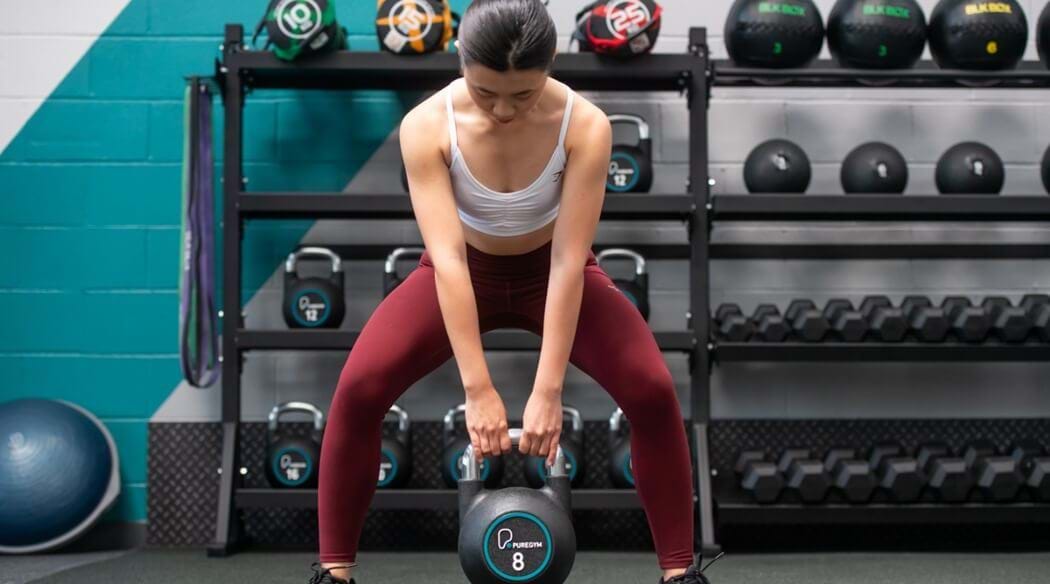
Goblet squat:The squat is one of the best lower body exercises you can do. Holding a dumbbell or kettlebell in front of the chest helps with form and depth, making it a great variation for low impact workouts.
B stance deadlift:This deadlift variation adopts a staggered stance and puts more focus on stability and single leg strength while relying less on power and momentum than other variations.
Dumbbell bench press:The dumbbell press improves strength and stability in the chest, shoulders, and arms. Using dumbbells forces each side to work unilaterally so you can work harder with less weight.
Seated cable row:The seated row strengthens the back, shoulders, and arms. The cable provides constant tension and produces a controlled movement.
Seated shoulder press:Sitting down for your shoulder press removes involvement from the lower body and stops you from using momentum from the needs to lift the weight.
Gym machines: Gym resistance machines provide a stable base and force a smooth, controlled movement pattern. Learn about the best gym resistance machines to try here.
No equipment low impact bodyweight moves
If you can’t make it to the gym, try these exercises for a low impact body weight workout you can do at home.
Pause or tempo squats: Adding a pause at the bottom of the squat or taking longer to do the exercise increases the time under tension and adds an extra challenge without weights.
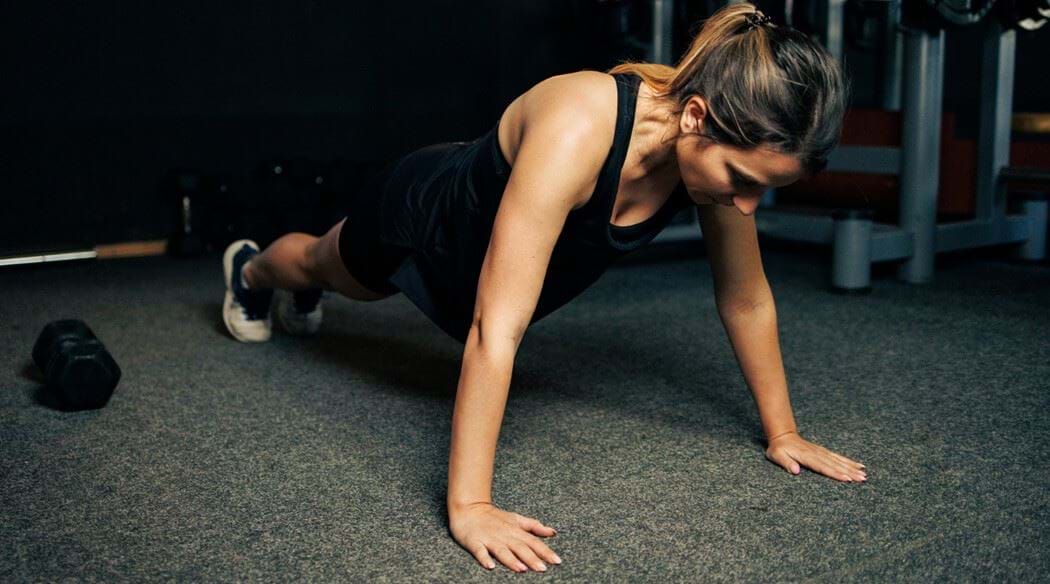
Push ups: Push ups work the chest, shoulders, triceps, and core and are challenging for all levels.
Wall sits: This isometric exercise builds strength, endurance, and stability and is a serious quad burner!
Glute bridges: Glute bridges strengthen the glutes and are great for people who sit for long periods. You can increase the difficulty by adding pulses or doing single leg variations.
Supermans: Supermans engage the full posterior chain, strengthen the core, and can improve mobility.
Full body low impact muscle building workout
You can use the exercises above to create your own low impact workouts, or give this full body workout a go.
Warm up
- 5 minutes moderate intensity on incline treadmill or cross trainer
Workout
Goblet squats - 3 x 8-12
Push ups - 3 x 8-10
Lat pulldowns - 3 x 8-12
Shoulder press machine - 3 x 8-12
Dumbbell lateral raises - 3 x 8-10
Cooldown
30 second chest stretch each side
30 second hamstring stretch each side
30 seconds cross body shoulder stretch each side
30 seconds standing quad stretch each side
Example weekly low impact strength training programme
There are several ways you can plan your workouts across the week to suit your schedule and goals. Here's an example of how a full week of low impact strength and cardio workouts might look like.
Monday: 30 minute incline treadmill workout
Tuesday: Full body at home low impact resistance workout
Wednesday: Pilates or yoga
Thursday: Full body low impact gym workout
Friday: 20 minute cross trainer workout
Saturday: Pilates or yoga
Sunday: Rest
Do you need equipment for low-impact resistance training?
Thinking about doing low impact strength training at home? There are plenty of exercises you can do without any equipment, but investing in a few pieces can help you to progress your workouts over time:
Dumbbells: Dumbbells are a great way to add weight to a variety of exercises. Having a few different weights or a pair of adjustable dumbbells is helpful, but even just a single dumbbell can make a difference.
Resistance bands: Resistance bands are affordable and take up minimal space while allowing you to add resistance to multiple exercises. They often come in multipacks so you get several resistances suitable for varying the load to each exercise.
Pull up bar: A pull up bar can be a low-cost way to train the back muscles, which are sometimes more difficult to train without kit.
Suspension trainer: Suspension training systems like TRX can be used with pull up bars or fixed to a sturdy anchor, and open up plenty of exercises like
How to get the most from your low impact workouts
Here are some tips and advice to ensure your low impact strength workouts are effective and safe.
Choose the right weight. Using too little weight or resistance won't cause enough challenge for strength and muscle gains; too heavy will cause issues with form. Choose a weight that is challenging but you can lift through a full range of motion with good form for your desired reps.
Rest days. Leave at least a full day between training the same muscle group twice to allow enough recovery.
Progressive overload. Increase weights or reps over time to continually challenge the muscles and increase strength.
Warm up and cool down. Warming up before workouts ensures your body is ready to move and reduces the risk of injury, while cooling down helps to prevent soreness and improves recovery.
Adjust the intensity. Low impact doesn't mean low intensity. You can make your workouts more challenging by choosing harder exercises, increasing the pace, or adding low impact cardio intervals.
FAQs
Yes - low impact strength training can be just as beneficial for building muscle as high impact training. Focus on lifting close to failure and progressing the difficulty each week to challenge the muscles enough for hypertrophy.
Although exercise can help with weight loss, the most effective method is to reduce your calorie intake to create a calorie deficit. Strength training can help to preserve muscle mass so that you lose fat rather than muscle, and cardio can help to create a bigger calorie deficit.
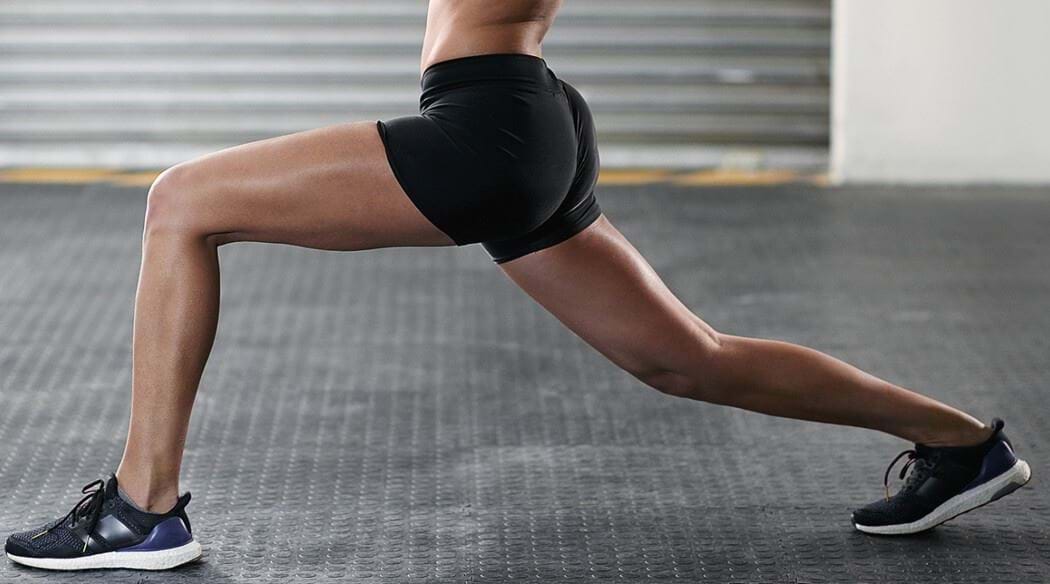
There are many low impact exercises you can do without equipment, such as lunges, push ups, tricep dips and glute bridges. As you get stronger, investing in some pieces of kit like resistance bands and dumbbells can help to make your workouts harder, but it's not necessary. Check out some of our favourite bodyweight workouts here.
Low impact training is suitable for everyone but is particularly great for seniors or beginners who may not have the muscular support and stability to protect their joints.
Strength training and cardio are different types of exercise with different benefits, and one should not replace the other. Strength training builds muscle and bone density but cardio is crucial for lung and heart health and helps to protect against chronic diseases. There are plenty of low impact aerobic activities you can try such as:
Swimming
Cycling
Gym machines such as cross trainer, incline treadmill, and rower
You will begin to feel stronger and more energetic in as little as four weeks. Physical changes such as increased muscle mass takes longer but should be noticeable after two to three months.
Feeling sore (known as DOMS) after a workout is common, especially when you're not to training, but it isn't necessary for changes to occur. As your body adapts to working out, you're less likely to experience muscle soreness from working out. As long as you are working hard and increasing the challenge over time, you'll see results. You can find ways to prevent sore muscles from training here.
Ready to try low impact training? Find your nearest gym for access to all the kit you need to get started.
Related Articles